The Best Fluffy Pancakes recipe you will fall in love with. Full of tips and tricks to help you make the best pancakes.

Healthy eating habits often get abandoned for one simple reason: taste. Too many “healthy” chicken recipes end up dry, bland, and forgettable — which makes it easy to assume nutritious cooking means sacrificing flavor. It doesn’t. With the right seasoning techniques and cooking methods, chicken dishes can be just as satisfying as their heavier, less nutritious counterparts, and often more interesting.
Chicken is America’s most consumed protein for good reason: it’s versatile, affordable, and a lean source of B vitamins, selenium, and phosphorus, with less saturated fat than red meat when prepared well. The real challenge isn’t finding healthy chicken recipes — it’s finding ones that actually taste good enough to make on a regular Tuesday night, not just for a special occasion.
This guide covers a master technique for building flavor and locking in moisture, followed by 24 distinct flavor variations you can rotate through so chicken never feels repetitive, plus the nutrition breakdown, substitutions, storage advice, and troubleshooting you need to make this a permanent part of your routine rather than a two-week experiment.
Table of Contents
Essential Equipment
A few tools make the difference between forgettable chicken and genuinely good chicken:
- Instant-read meat thermometer — the single most useful tool for avoiding both undercooked and overcooked chicken. Guessing by color or cook time is unreliable.
- Meat mallet or heavy skillet — for pounding chicken breasts to an even thickness so they cook uniformly.
- Cast iron or stainless steel skillet — better browning than non-stick, which matters for flavor development.
- Sheet pans — for one-pan bakes that cook chicken and vegetables together.
- Glass meal prep containers with compartments — keep components separate so textures and flavors don’t run together in the fridge.
- Sharp chef’s knife — for clean cuts that don’t tear the meat, especially important when slicing against the grain.
None of this is mandatory, but the thermometer in particular solves the majority of “why does my healthy chicken taste bad” complaints, since overcooking is the most common cause of dry, rubbery texture.
Ingredients (Master Recipe)
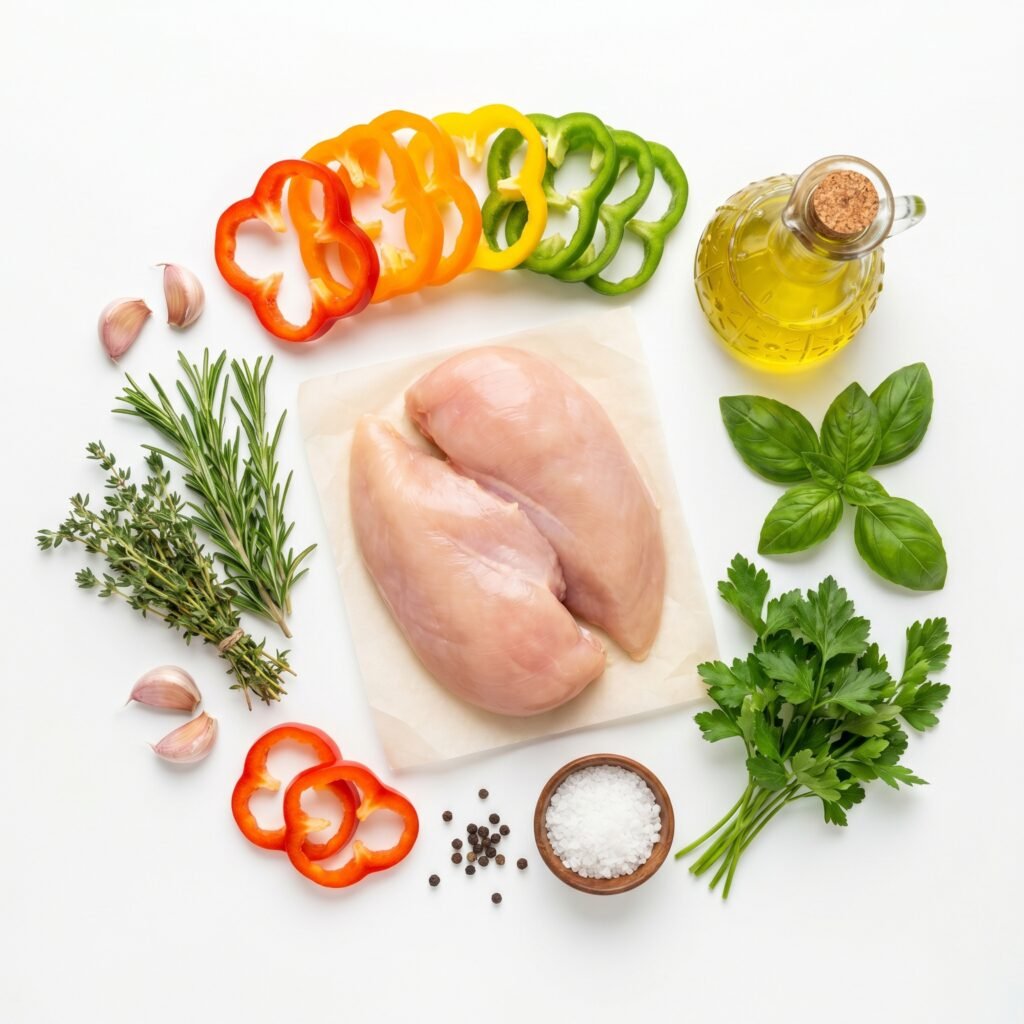
Chicken base
- 2 lbs boneless, skinless chicken breasts or thighs, trimmed
- 2 tbsp extra virgin olive oil or avocado oil (or vegetable broth for oil-free cooking)
- 1 tsp sea salt
- 1/2 tsp freshly ground black pepper
Flavor builders
- 4 cloves garlic, minced
- 1 tbsp fresh ginger, grated
- 2 tbsp fresh lemon juice
- 1 tbsp low-sodium soy sauce or coconut aminos
- 2 tsp honey or maple syrup
- 1 tsp smoked paprika
- 1 tsp ground cumin
- 1/2 tsp dried oregano (or 1 tbsp fresh)
- 1/4 tsp cayenne pepper (optional)
Vegetables
- 2 cups broccoli florets
- 1 red bell pepper, sliced
- 1 medium zucchini, sliced
- 1 cup cherry tomatoes
- 1/2 red onion, sliced
- 2 cups baby spinach or kale
Finishing touches
- 2 tbsp fresh herbs (cilantro, parsley, or basil), chopped
- 1 tbsp toasted sesame seeds or slivered almonds
- Zest of 1 lemon
This combination is intentionally a template rather than a fixed recipe. Once you understand the role each ingredient plays — acid for tenderizing, fat for carrying flavor, sweetness for balance, aromatics for depth — you can swap the spice blend entirely and still get a reliably good result, which is the basis for the 24 variations below.
Timing
- Prep: 15–20 minutes (add 30 minutes to 4 hours if marinating — even 15 minutes of marinating makes a noticeable difference)
- Cook: 20–35 minutes depending on method — 6–8 minutes per side for grilling/searing, 20–25 minutes for baking at 400°F, 3–4 hours on high (or 6–8 on low) for a slow cooker
- Total: 35–55 minutes for most recipes — comparable to ordering and waiting for takeout, but with far better nutrition
- Meal prep: 90 minutes on a single prep day can yield 4–5 complete meals for the week
Step-by-Step Instructions
1. Prepare the chicken Pat it completely dry with paper towels — moisture is the enemy of a good sear and is the main reason home-cooked chicken often steams instead of browning. Pound thicker portions to an even thickness using a mallet or the bottom of a heavy pan; this prevents the common problem of dry edges paired with an undercooked center. Season both sides generously with salt and pepper, pressing it into the meat, then let it rest at room temperature for 10–15 minutes before cooking so it cooks more evenly.
2. Build the flavor base Whisk together garlic, ginger, lemon juice, soy sauce, honey, and your chosen spices until the honey fully dissolves and the mixture emulsifies slightly. This single mixture covers salty, sweet, sour, and umami — the four flavor pillars that make a dish taste complete rather than one-dimensional. The acid begins tenderizing the chicken immediately, while the honey promotes caramelization during cooking. Reserve half the marinade before it touches raw chicken if you want to use it as a finishing sauce later (never reuse marinade that’s touched raw meat without boiling it first).
3. Choose a cooking method
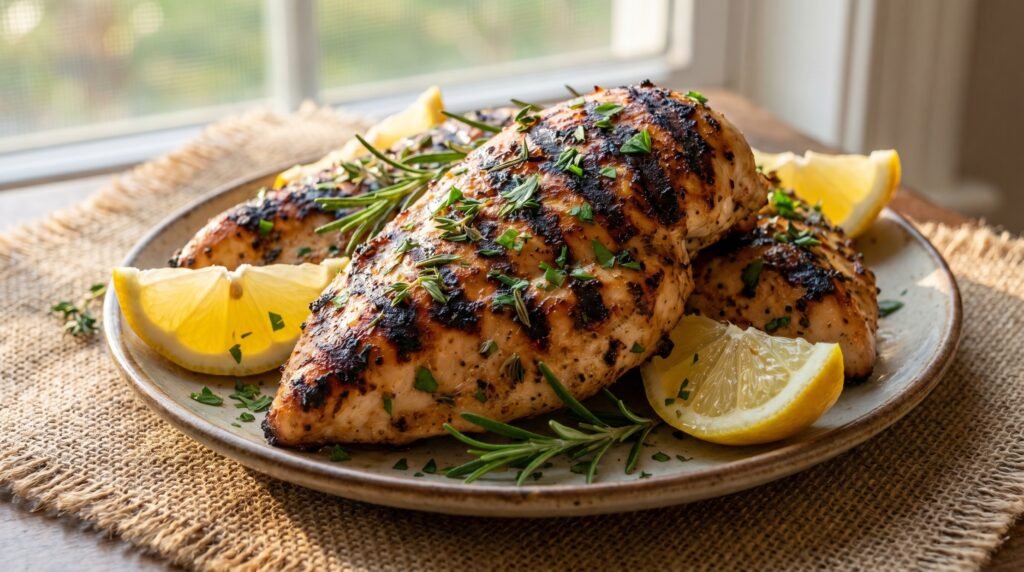
- Grilled: Preheat to medium-high and oil the grates. Cook 6–8 minutes per side until it hits 165°F internally. Resist moving it early so proper grill marks develop.
- Baked: Arrange in a single layer on a parchment-lined sheet at 400°F for 20–25 minutes. The high heat creates a slightly crisp exterior while the interior stays juicy.
- Pan-seared: Heat oil in a skillet over medium-high until shimmering, then leave the chicken undisturbed for 5–6 minutes to develop a golden crust before flipping and cooking another 6–7 minutes.
- Slow cooker: Best for thighs — 3–4 hours on high or 6–8 on low, ideal for set-it-and-forget-it weeknights.
4. Add vegetables While the chicken cooks (or during the last 10 minutes of baking), toss your chopped vegetables with a small amount of oil, salt, and complementary seasoning. Heartier vegetables like broccoli, peppers, and zucchini need 8–10 minutes to reach tender-crisp; cherry tomatoes need only 5 before they burst with concentrated sweetness. For one-pan meals, add sturdier vegetables like carrots first, then delicate greens like spinach in the final 2 minutes so they wilt without overcooking.
5. Rest and finish Once chicken reaches 165°F, remove it from heat and let it rest 5–7 minutes — this is the step most home cooks skip, and it’s the difference between juicy chicken and a dry puddle of lost moisture on the cutting board. While it rests, toast nuts or seeds in a dry pan until fragrant, chop fresh herbs, and zest the lemon. These elements lose aromatic intensity if added during cooking, so they’re saved for the very end. Slice against the grain for maximum tenderness, then plate with vegetables and a generous shower of the fresh garnishes.
24 Flavor Variations to Keep Things Interesting
The technique above stays constant — pat dry, season, sear or bake, rest — but swapping the spice blend and sauce completely changes the dish. Here are 24 ways to apply it:
- Lemon Herb — lemon zest, garlic, oregano, parsley
- Smoky Paprika — smoked paprika, cumin, garlic, lime
- Honey Garlic — honey, soy sauce, garlic, rice vinegar
- Mediterranean — oregano, lemon, olives, sun-dried tomato
- Cajun-Spiced — paprika, cayenne, garlic powder, thyme
- Teriyaki — soy sauce, ginger, garlic, a touch of honey
- Tandoori-Style — yogurt marinade, garam masala, turmeric, ginger
- Chimichurri-Topped — grilled plain, finished with parsley-garlic-vinegar sauce
- Lemon Pepper — black pepper, lemon zest, garlic
- Coconut Curry — coconut milk, curry powder, ginger, lime
- BBQ Rub — smoked paprika, brown sugar alternative, cumin, chili powder
- Greek Yogurt Marinade — yogurt, dill, lemon, garlic
- Sesame Ginger — sesame oil, ginger, soy sauce, scallion
- Za’atar — za’atar spice blend, olive oil, lemon
- Chili Lime — chili powder, lime juice, cilantro
- Balsamic Herb — balsamic vinegar, rosemary, thyme, garlic
- Buffalo-Style (Lightened) — hot sauce, a touch of butter or ghee, garlic
- Pesto-Crusted — basil pesto rubbed on before baking
- Moroccan Spice — cumin, cinnamon, ginger, turmeric, paprika
- Garlic Parmesan — garlic, light parmesan, parsley, lemon
- Mustard Herb — dijon mustard, thyme, garlic, white wine vinegar
- Korean-Inspired — gochujang or chili paste, soy sauce, garlic, sesame
- Italian Herb — basil, oregano, garlic, sun-dried tomato
- Curry Yogurt — yogurt, curry powder, garlic, lime
Each variation works with the same five-step method above — only the marinade or rub changes, which means you can prep one batch of plain seasoned chicken and split it into two or three flavor directions if you’re cooking for a household with different preferences.
Nutritional Information
Per serving (≈6 oz chicken + 2 cups vegetables):
| Nutrient | Amount |
|---|---|
| Calories | 280–350 |
| Protein | 38–45 g |
| Carbohydrates | 12–18 g |
| Fiber | 4–6 g |
| Total Fat | 8–12 g |
| Saturated Fat | 1.5–3 g |
| Cholesterol | 95–110 mg |
| Sodium | 380–520 mg |
| Potassium | 720–890 mg |
| Vitamin A | 45–60% DV |
| Vitamin C | 110–140% DV |
| Iron | 10–15% DV |
These recipes naturally align with USDA ChooseMyPlate guidance — half the plate in vegetables and fruit, a quarter in lean protein, a quarter in whole grains — simply by pairing a substantial chicken portion with multiple vegetables. Research from Harvard’s Nutrition Source links replacing red meat with poultry to reduced cardiovascular risk, particularly when it’s prepared without excess saturated fat from frying or heavy sauces.
The protein content here (38–45 g per serving) matters for more than muscle maintenance — protein has a higher thermic effect than carbohydrates or fat, meaning your body burns more energy digesting it, and it promotes satiety for longer after eating. Combined with 4–6 g of fiber per serving from the vegetables, this combination is part of why protein-and-vegetable-forward meals tend to support weight management better than meals built mainly around refined carbohydrates. The sodium range assumes low-sodium soy sauce or coconut aminos; using regular soy sauce or adding table salt liberally will push the upper end higher, so taste before adding extra salt at the table.
Healthier Alternatives
- Lower calorie: Skip the oil and use broth or cooking spray instead (saves about 120 calories per tablespoon of oil); steam or poach rather than pan-sear; swap honey for stevia or monk fruit if you want to cut sugar further.
- Dairy-free/vegan: Substitute extra-firm tofu (pressed for 30 minutes to remove excess moisture), tempeh, or thick cauliflower steaks, using the same marinades and cook times as a starting point.
- Gluten-free: Use tamari or coconut aminos instead of soy sauce, and double-check spice blends, since some contain wheat-based anti-caking agents.
- Paleo/Whole30: Use ghee, coconut oil, or avocado oil for cooking fat; replace soy sauce with coconut aminos; skip sweeteners entirely during an elimination phase.
- Higher protein: Use thighs instead of breasts, add a side of quinoa or lentils, and top the finished dish with a tablespoon of hemp hearts or chia seeds for extra protein and omega-3s.
- Budget-friendly: Buy whole chickens and break them down yourself rather than buying pre-cut pieces; freeze vegetable scraps to make your own broth; shop seasonal produce, which tends to be both cheaper and more flavorful.
Serving Suggestions
Pair with a whole grain for a complete meal — quinoa for a nutty, complete-protein base, brown or wild rice for chew, cauliflower rice for a lower-carb option, or farro or bulgur for a Mediterranean lean. Build a Buddha bowl by layering sliced chicken over greens with roasted vegetables, a scoop of hummus, sliced avocado, and a tahini-lemon drizzle.
For family-style dinners, serve whole pieces on a platter surrounded by roasted vegetables, with a few sauces on the side — chimichurri, tzatziki, or salsa verde — so everyone can customize their plate without you cooking multiple versions of the same meal.
Leftovers are where this style of cooking really pays off: dice cold chicken into salads with mixed greens and a vinaigrette, shred it for lettuce-wrap or corn tortilla tacos topped with pico de gallo and Greek yogurt instead of sour cream, or slice it into whole-grain wraps with hummus and vegetables for a packed lunch. For entertaining, thread marinated chunks onto skewers with vegetables and grill until charred — an easy, interactive way to serve a crowd.
Common Mistakes to Avoid
Overcooking. This is the single biggest reason people give up on healthy chicken. Pull it from heat at 160–162°F; carryover cooking brings it to a safe 165°F during resting. Chicken cooked past about 175°F loses significant moisture and turns stringy.
Underseasoning. Properly seasoned food needs less added fat and sugar to taste satisfying, so don’t under-salt out of an unnecessary fear of sodium. Season in layers throughout cooking rather than only at the end, and remember that vegetables and grains absorb seasoning too — taste and adjust before serving.
Crowding the pan. This prevents browning and causes steaming instead. Leave at least an inch between pieces when pan-searing, and cook in batches if needed — the golden crust from proper browning (the Maillard reaction) is a major source of flavor that’s easy to lose by overcrowding.
Skipping the rest period. Cutting into chicken right off the heat lets juices run out onto the cutting board instead of redistributing through the meat. Five minutes of patience makes a real difference.
Using old spices. Dried spices lose potency after six months to a year. Buy in small quantities, store in a cool, dark place, and replace them regularly — or use fresh herbs whenever the recipe allows for it.
Uneven thickness. Skipping the two minutes it takes to pound thicker portions leads to dry edges and undercooked centers in the same piece of chicken.
Ignoring size variation. An eight-ounce breast takes meaningfully longer than a four-ounce cutlet. Check internal temperature rather than relying on a fixed cook time, especially with breasts of inconsistent size.
Storing Tips
Refrigerator: Cool cooked chicken to room temperature within two hours of cooking to limit bacterial growth, then store it separately from vegetables in shallow airtight containers, since they have different moisture profiles. Cooked chicken keeps 3–4 days refrigerated; raw marinated chicken keeps up to 2 days, sealed completely to prevent cross-contamination.
Freezer: Freeze cooked chicken within 3–4 days of cooking for best quality. Wrap individual portions tightly, then place in freezer bags with air removed and label with the date — frozen cooked chicken holds quality for 2–3 months. Raw marinated chicken can be frozen for up to 9 months, though texture softens slightly on thawing. Freeze vegetables separately, since their water content changes when frozen alongside protein.
Meal prep: Cook chicken and vegetables on a designated prep day but keep them separate, assembling meals fresh each morning or the night before for the best texture. Store sauces and dressings separately and add them only right before eating to avoid sogginess. Quality glass containers with secure, leak-proof lids that don’t absorb odors are worth the investment if you’re doing this weekly.
Reheating: Avoid the microwave when possible, since it tends to create a rubbery texture. A covered skillet with a tablespoon of water or broth over medium-low heat works better, or a covered dish in a 325°F oven for 15–20 minutes. Add fresh vegetables or a squeeze of citrus after reheating to bring the dish back to life.
Marinade prep: Make several marinades on your prep day and freeze them in individual portions. Thaw overnight in the fridge, add fresh chicken in the morning, and it’s ready to cook by dinner — a small habit that saves real time on busy weeknights.
Vegetable storage: Hardier vegetables like broccoli, peppers, and Brussels sprouts keep well for 4–5 days. More delicate options like spinach and zucchini are best used within 2–3 days. Wrap fresh herbs in a damp paper towel inside a plastic bag for the longest shelf life.
Conclusion
Healthy chicken recipes can absolutely taste amazing — it comes down to technique, seasoning, and fresh ingredients, not deprivation. The master method here is intentionally simple enough to repeat weekly, while the 24 flavor variations mean you’re never eating the same dish twice in a row. Try a few this week and see how far flavor can go without sacrificing nutrition.
Frequently Asked Questions
What are the healthiest cooking methods for chicken? Grilling, baking, poaching, and air frying require little to no added fat while keeping nutrients intact. Grilling lets fat drip away naturally; poaching keeps chicken moist using only seasoned broth; air frying achieves a crispy texture using up to 80% less oil than deep frying. Slow cooking works well for thighs and tougher cuts, breaking down connective tissue over time. Avoid pan-frying in excess oil or deep frying, both of which add unnecessary calories and saturated fat. Regardless of method, pull chicken at 165°F internal temperature to prevent dryness.
How can I make chicken more flavorful without added fat? Lean on acids, aromatics, and spices instead of butter or cream. Marinate in citrus juice, vinegar, or yogurt, all of which tenderize while adding brightness. Build depth with garlic, ginger, shallots, and onions, which turn sweet and mellow when cooked. Toast spices briefly in a dry pan before using to release their essential oils and intensify flavor. Use fresh herbs generously — hardy ones like rosemary and thyme early in cooking, delicate ones like cilantro and basil at the end. Umami-rich ingredients like mushrooms, miso, or tomato paste add richness without dairy, and a final squeeze of citrus brightens the whole dish.
What are good healthy side dishes to pair with chicken? Roasted vegetables (Brussels sprouts, carrots, sweet potatoes), low-carb options like cauliflower rice, and whole grains such as quinoa, farro, or brown rice all work well. Mixed green salads, steamed broccoli or green beans with garlic and lemon, and Mediterranean sides like tabbouleh, fattoush, or Greek salad add freshness and acidity, while bean salads with chickpeas or lentils boost plant-based protein. Zucchini noodles or spaghetti squash are good options for lower-carb meals. Aim to keep half your plate in vegetables.
Can I use chicken thighs instead of chicken breast? Yes — thighs are often juicier and more flavorful due to higher fat content, with about 50 more calories and 3 extra grams of fat per 4 oz serving compared to breast, though they’re still considered lean once the skin is removed. That extra fat also makes them more forgiving against overcooking, which is useful for less experienced cooks. Cook to 165°F: about 7–10 minutes per side when pan-searing, or 25–30 minutes when baking at 400°F. Bone-in thighs take longer but offer more flavor; boneless thighs are more convenient for quick weeknight cooking.
How do I meal prep healthy chicken for the week? Cook 4–6 lbs of chicken in batches using different methods (baking, grilling, slow cooking) with 2–3 marinades for variety, then cool completely before storing in individual portions. Pair with a few roasted or steamed vegetables and two whole grain options, storing everything separately in labeled glass containers. Add sauces and fresh toppings only at assembly to keep textures from going soggy. Cooked chicken keeps 3–4 days refrigerated, or freeze extra portions for later weeks. Budget 90–120 minutes on prep day for a full week of mix-and-match meals.
Can I prepare these recipes in advance for a dinner party? Yes, with some adjustments. Marinate the chicken up to 24 hours ahead and keep it refrigerated until you’re ready to cook — most of these marinades benefit from extra time anyway. Cook the chicken close to serving time when possible, since reheated chicken is never quite as good as fresh off the heat, but if you do need to prep ahead, slightly undercook (to about 160°F) and finish it in a hot oven just before serving to avoid drying it out further during reheating. Vegetables can be roasted a few hours ahead and reheated briefly, or served at room temperature if the dish allows for it.
Is it safe to marinate chicken in the refrigerator overnight? Yes, marinating chicken in the refrigerator for up to 24 hours is generally safe and often improves flavor and tenderness, particularly with acidic marinades. Beyond about 24 hours, the acid in citrus- or vinegar-based marinades can start to break down the texture of the meat in an unpleasant way, making it mushy rather than tender. Always marinate in a sealed container or bag, keep it refrigerated rather than at room temperature, and never reuse marinade that touched raw chicken unless it’s been brought to a full boil first.