
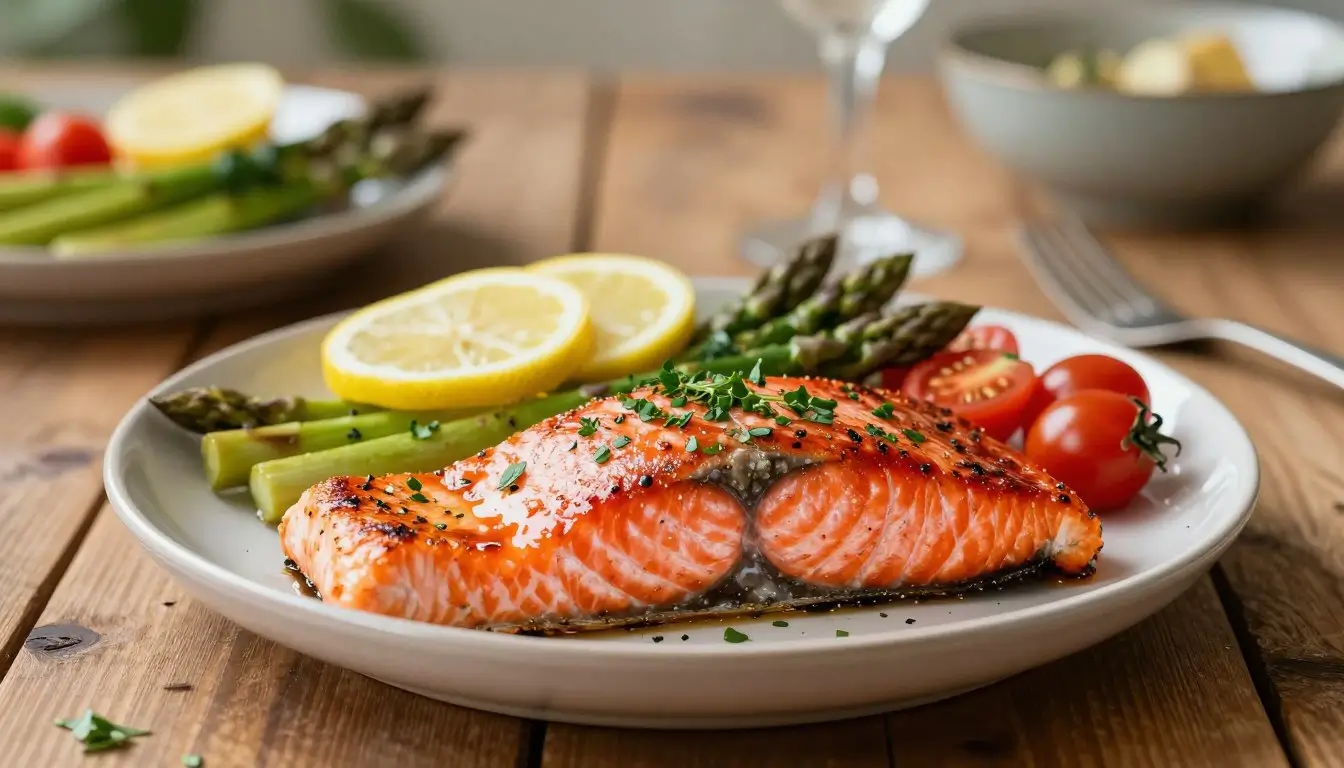
Savory Sockeye Salmon Recipe for a Quick Dinner
Walking in after a long day, you want dinner to be easy, not hard. Sockeye salmon recipe, raised in the Pacific Northwest, is perfect. It’s bold, firm, and tastes great with simple seasonings or a zesty glaze. This recipe is quick, healthy, and ready in under 30 minutes.
This is your guide for a fast, tasty salmon dinner. Choose baked sockeye for ease or a quick sear for a crispy edge. It’s great for beginners and can impress guests. Most recipes serve four, prep in five minutes, and cook in under 30 minutes.
Sockeye salmon can handle bold flavors like honey-garlic or gochujang without drying out. In this guide, you’ll learn to make a savory sockeye that’s perfect for weeknights. It’s reliable, fast, and always delicious.
Table of Contents
Key Takeaways
- Sockeye salmon is ideal for quick, flavorful dinners and suits both simple and bold preparations.
- Most savory salmon recipes serve four and finish in under 30 minutes with about 5 minutes of prep.
- Baked sockeye offers hands-off convenience; searing adds texture and a golden crust.
- Bold glazes like honey-garlic or gochujang keep the fish moist and add international flair.
- This recipe is beginner-friendly but can be elevated for company with minimal extra effort.
Why sockeye salmon makes a perfect quick dinner
Sockeye salmon is great for a fast, satisfying meal. Its bright red color and firm flesh offer a hearty bite. It’s easy to prepare with bold glazes or simple searing, making dinner quick and easy.

Flavor profile and texture
Sockeye has a stronger, more pronounced taste than other fish. It tastes of the ocean with a sweet edge from its diet. This flavor pairs well with sweet-spicy glazes like gochujang-honey.
The salmon’s texture is firm and meaty. This makes it great for searing or grilling. Its denser fillets offer a steak-like mouthfeel that’s substantial.
Nutrition benefits of sockeye salmon
Sockeye is packed with nutrition. It’s high in protein and omega-3s, supporting heart and skin health. Its bright color comes from astaxanthin, an antioxidant.
Omega-3s in sockeye reduce inflammation and improve heart health. Eating it regularly as part of a balanced diet is smart for weeknight meals.
Weeknight-friendly cooking time
Most sockeye recipes cook quickly. A hot pan sear or quick oven bake takes about 15 to 20 minutes. This fits tight schedules and delivers a high-quality meal.
Use 1-inch thick fillets to avoid overcooking. Adjust heat and timing to keep the meat juicy. These tips ensure flavorful dinners any night.
| Feature | Why it matters | Practical tip |
|---|---|---|
| sockeye flavor | Stronger, ocean-forward taste that stands up to bold sauces | Use sweet-spicy glazes or citrus to balance intensity |
| salmon texture | Firm, meaty fillets hold shape during searing and grilling | Choose 1″ fillets to prevent drying while ensuring a hearty bite |
| omega-3 salmon benefits | Supports heart and skin health with anti-inflammatory fats | Include sockeye twice a week for meaningful nutritional impact |
| quick salmon cooking time | Ready in roughly 15–20 minutes for busy weeknights | Sear on high heat or bake at 400°F for reliable results |
Ingredients you’ll need for this savory sockeye salmon recipe
Start with a whole fillet for easy prep and the best texture. A 2-pound sockeye fillet with skin on is perfect at most fish counters. Sockeye’s bright flavor and color make it great for quick dinners.

Main salmon ingredient
Choose a single, evenly thick fillet about 1 inch thick for even cooking. Keep the skin on for crispness when seared or roasted. Freshness is key; buy sashimi-grade for rare or medium.
Simple pantry seasonings
Use pantry staples like brown sugar or honey, olive oil, paprika, salt, pepper, and garlic powder. Brown sugar adds a soft sweetness that complements the fish. Garlic powder ensures a smooth crust.
- Salt and black pepper — basic seasoning to taste.
- Paprika — use regular paprika for color and mild warmth.
- Brown sugar or honey — for a touch of sweetness that caramelizes.
- Garlic powder — spreads evenly over the fillet.
- Olive oil — binds the seasonings and helps crisp the skin.
These seasonings are versatile and work for baked fillets, sheet-pan meals, and quick skillet sears.
Optional glaze and international flavor twists
Add depth with a honey-garlic glaze or a spicy-sweet gochujang finish. Both can transform a plain fillet into a restaurant-style dish.
- Honey-garlic glaze ingredients: honey, reduced-sodium soy sauce, fresh lemon juice, crushed red pepper flakes, olive oil, and garlic. Finish with lemon slices and fresh garlic for brightness.
- Gochujang salmon ingredients: gochujang paste, coconut aminos or low-sodium soy, honey, minced garlic, lemon zest, olive oil, sea salt, and black pepper. Add green onions if you like a fresh garnish. A sample ratio: 1/2 cup coconut aminos, 2 tablespoons honey, 2 tablespoons gochujang for mild heat.
Substitute honey for brown sugar to simplify shopping. Use coconut aminos instead of soy for a gluten-free, lower-sodium option. For thick glazes, prefer lemon zest over juice to retain texture. Fresh garlic gives the best flavor, but jarred minced garlic works in a pinch.
Equipment and kitchen tools for fast, easy cooking
Get your mise en place ready so you can move through the recipe with confidence. The right gear speeds up prep, cuts cleanup time, and helps you get a consistent sear or oven finish on sockeye. Below are compact lists of gear to keep on hand for weeknight dinners.

Essential tools
Start with a sturdy sheet pan lined with foil for baked salmon. Foil makes cleanup simple and prevents stuck skin.
Use a heavy-bottomed nonstick skillet or a stainless-steel pan that heats evenly when you sear fillets. A good pan gives you a reliable crust without hot spots.
Keep a silicone pastry brush for oil and glaze application. Pair that with a sharp chef’s knife and kitchen tweezers to find and remove pin bones before cooking.
Have tongs or a fish spatula for gentle flipping. These let you move fillets without tearing the flesh.
Optional tools for better results
An instant-read thermometer is a smart pick for precise doneness. It removes guesswork and helps you hit the target internal temp every time.
A small saucepan works well for glazes and pan sauces. A baking sheet with parchment or foil is useful for foil-packet methods and keeps the oven tidy.
Consider a kitchen timer and a small ladle or basting brush for steady glaze application. These simple items make finishing touches easier and more consistent.
| Tool | Why it helps | When to use |
|---|---|---|
| Sheet pan with foil | Fast cleanup, even baking surface | Baked fillets, roasted sides |
| Nonstick skillet (or heavy-bottomed pan) | Even heat, less sticking, good sear | Skillet-seared variations |
| Silicone pastry brush | Even oil or glaze spread, heat-safe | Oiling skin, glazing during cooking |
| Kitchen tweezers / fish tweezers | Quick, precise pin bone removal | Prep before seasoning |
| Tongs & fish spatula | Gentle handling, clean flips | Turning fillets in pan |
| Instant-read thermometer | Accurate internal temp, no guessing | Final doneness check |
| Small saucepan & ladle | Controlled glaze and sauce prep | Making honey-garlic or gochujang glazes |
When handling hot oil, brush fillets away from you to reduce splatter. Use foil or parchment to shield surfaces and avoid stuck skin. With these salmon cooking tools and essential kitchen tools for salmon on hand, you’ll get faster, cleaner results and a better plate every time.
Step-by-step oven-baked sockeye method
You can make a delicious baked sockeye in under 20 minutes. Just follow a few easy steps. Start with quick prep, set the oven right, and bake for the perfect time.
Prep and seasoning
First, pat the fillets dry. Then, line a sheet pan with foil. Mix brown sugar, salt, paprika, garlic powder, and black pepper in a bowl.
Place the salmon skin-side down on the foil. Brush the top with olive oil using a silicone brush. Sprinkle the spice mix evenly over each piece.
Baking time and temperature
Preheat your oven. For a gentle finish, set it to 375°F. Plan for 10–15 minutes for typical fillets.
If you want it quicker, try 400°F. Aim for 8–12 minutes for a 1-inch-thick fillet. Use an instant-read thermometer to check the internal temperature.
Target 115–125°F for medium-rare. For medium to well-done, aim for 125–140°F. Treat 140°F as the upper limit to avoid drying the fish.
Finishing and resting
Remove the salmon when it reaches your chosen temperature. Tent it loosely with foil and let it rest 5–10 minutes. This allows carryover heat to finish cooking and juices to redistribute.
If you’re adding a glaze—like soy, coconut aminos, or gochujang—brush it on after searing or spread it on top before sealing in foil. Do not flip when glazing in a foil packet. Keep salt light in the rub since glazes add noticeable saltiness.
Step-by-step skillet-seared honey-garlic variation
This skillet-seared honey-garlic variation is perfect for a quick weeknight dinner. It gives you a crispy outside and a shiny sauce in under 30 minutes. You’ll get four 6-oz fillets, and leftovers can be stored in the fridge for up to 3 days.
Making the honey-garlic glaze
Start by whisking together 1/3 cup honey, 1/4 cup reduced-sodium soy sauce, 2 tablespoons fresh lemon juice, and 1 teaspoon crushed red pepper flakes. Taste it and adjust if it’s too sweet or spicy. Then, mince two cloves of garlic and set it aside. This way, the garlic will add a burst of flavor when it hits the pan.
Searing technique for a crisp exterior
Heat 2–3 tablespoons of neutral oil in a large skillet over medium-high heat. Make sure it’s hot but not smoking. Pat the salmon dry and season with salt and pepper. Place the fillets skin-side up first for a quick crust, or skin-side down for extra protection.
Cook the fillets undisturbed for about 2–3 minutes until they get a deep golden crust. Flip them and add a bit more oil if needed. Add the minced garlic, then pour the honey mixture and a few thin lemon rounds into the pan. Cook until the sauce reduces by about one-third and coats the fillets.
Serving suggestions with glaze
Spoon the honey garlic glaze over each fillet, letting it cling to the crust. Serve with coconut rice to soak up the sauce, sautéed bok choy, or caramelized Brussels sprouts. These add contrasting texture and color.
| Step | Action | Timing |
|---|---|---|
| Prep glaze | Whisk honey, reduced-sodium soy, lemon juice, red pepper flakes | 3 minutes |
| Heat skillet | Bring 2–3 tbsp oil to hot, not smoking | 1–2 minutes |
| Sear first side | Place salmon skin-side up or down; cook undisturbed | 2–3 minutes |
| Flip and finish | Add oil if needed, garlic, then honey mixture and lemons; reduce | 3–4 minutes |
| Serve | Spoon honey garlic glaze for salmon over fillets; garnish with lemon | Immediate |
Gochujang-glazed sockeye alternative for bold flavor
Make your weeknight salmon dish bold and Korean-style. It’s all about spice, sweet, and umami. Use one-inch fillets for moist and flaky fish.
Gochujang and sockeye salmon are a perfect pair. The paste adds a spicy-sweet depth that balances the fish’s flavor. The sticky glaze keeps the fish tender with caramelized edges.
For a quick sauce, mix coconut aminos or soy, honey, gochujang paste, and garlic. Start with 2 tablespoons of gochujang for mild heat, 3 for more. Warm it until thick, then add lemon zest to enhance flavors.
Use foil packets to keep juices in and clean up easy. Preheat the oven to 400°F. Pat the fish dry, brush with olive oil, and season lightly. Place the fish skin-side down on foil, add the glaze, and seal the packets.
Bake for eight to twelve minutes until the fish is about 130–135°F. Let it rest, then garnish with green onions or herbs.
| Step | Action | Timing / Temp |
|---|---|---|
| Prep | Pat salmon dry, brush with olive oil, season with sea salt and pepper | 2–3 minutes |
| Sauce | Simmer gochujang, coconut aminos, honey, garlic; stir in lemon zest | About 5 minutes until coats spoon |
| Assemble | Place fillet on foil, pour warm glaze over top, seal packet | 2–4 minutes |
| Bake | Bake sealed packets until salmon reaches target temperature | 400°F for 8–12 minutes; target 130–135°F |
| Rest & Serve | Unwrap, tent loosely, garnish with green onions or herbs | Rest 5–10 minutes before serving |
How to tell when your salmon is perfectly cooked
Cooking salmon right needs the right tools and practice. You need a plan to make sure every fillet is perfect. Here are steps for checking temperature, looking for visual signs, and feeling when it’s done.
Using an instant-read thermometer
An instant-read thermometer is the most reliable way to check salmon’s internal temperature. Stick the probe into the thickest part of the fillet. Aim for 115–125°F for medium-rare and 125–140°F for medium to well-done. Remember, 140°F is the max for many guidelines.
Let the salmon rest after removing it. This lets the internal temperature rise a bit more.
Visual and touch cues
Look for an opaque outside that still shines and flesh that flakes easily. The flakes should separate along muscle lines but stay moist. For seared pieces, the fillet should come off the pan easily when the outside is set.
Don’t just rely on a poke test if you’re new to cooking fish. The thermometer is your best friend.
Personal preference and practice tips
What you like is key, like choosing steak temperature. Different salmon types, like king, sockeye, and coho, feel different at the same temperature. Cook a few to different temps and note the feel and look.
With time, you’ll know how to tell salmon is done without the thermometer.
What to serve with savory sockeye salmon
Choose sides that complement the salmon’s rich taste and quick cooking. You want bright, simple elements that enhance the fish without overpowering it. Here are some easy ideas for weeknights or when hosting guests.
Quick starches and rice bowls
Try coconut rice to soak up the honey-garlic glaze. White or brown rice is great for a classic choice. For a low-carb option, use cauliflower rice and add a bit of lime.
For a quick rice bowl, add cucumber, avocado, and a soy or sesame dressing. These bowls are fast to make and offer a balanced meal with little effort.
Fast vegetable sides
Opt for quick-cook veggies that stay fresh and crisp. Sautéed bok choy and shiitake mushrooms are perfect in five to seven minutes, especially with Asian glazes.
Roast asparagus, green beans, or Brussels sprouts quickly at high heat. This method adds char and tenderness. These sides offer texture contrast and are quick to prepare.
Salads and lighter pairings
In warm weather, flake leftover salmon over mixed greens. A lemon vinaigrette keeps things light. Add pickled radishes, carrots, or cucumber for a crunchy touch.
For a zesty side, try an Asian-style cabbage salad with sesame and rice vinegar. These pairings are perfect for lunch or dinner and use up leftover salmon.
Buying, storing, and using leftover sockeye salmon
When buying sockeye salmon, look for certain signs. Check the color, smell, and labels. Wild-caught Bristol Bay sockeye from Alaska is known for its flavor and sustainability.
Keep sockeye salmon cold and wrapped after buying. Raw fillets can stay in the fridge for two days. Frozen salmon can be thawed in the fridge when you’re ready to use it.
Cooked salmon can last 3–4 days in the fridge. You can freeze it for up to three months. When reheating, add a little broth or coconut aminos to keep it moist.
Buying tips and sustainability
Check the origin labels and ask your fishmonger about the fish’s source. Bristol Bay sockeye and other Alaskan sources are managed well. Choosing wild sockeye means you get richer flavor and support sustainable practices.
Storage best practices
- Refrigerate cooked salmon in an airtight container within two hours of cooking.
- Use cooked portions within 3–4 days for best flavor and safety.
- Freeze only if needed; freeze in portion sizes and thaw in the fridge before reheating.
Creative leftover uses
Leftover salmon is great for cold dishes. Use it on salads or in grain bowls. Mix it with mayonnaise, lemon, and dill for a tasty spread, or add it to warm fried rice for a quick dinner.
| Use | Prep | Why it works |
|---|---|---|
| Salad topping | Flake cold salmon over greens, add vinaigrette | Maintains texture and brightens flavor |
| Salmon spread | Mix flaked salmon with mayo, lemon, herbs | Quick sandwich or cracker topping, portable |
| Rice or grain bowl | Warm rice, add flaked salmon, soy or coconut aminos | Combines protein with starch for a balanced meal |
| Fried rice or pasta | Toss in at the end of cooking to warm through | Preserves moisture and prevents overcooking |
Conclusion
These sockeye salmon recipe ideas are perfect for a quick weeknight meal. You can try baking it with brown sugar and spices, searing it in a skillet, or glazing it with gochujang. Each method takes about 20–30 minutes, making dinner easy.
For the best results, use 1-inch-thick fillets to prevent drying. Line your pan or use foil for easy cleanup. Use an instant-read thermometer to check if it’s done, aiming for 115–135°F. Let the fish rest for 5–10 minutes before serving to keep it juicy.
When shopping, choose wild sockeye and look for it from places like Bristol Bay. Store leftovers in the fridge for 3–4 days. Use them in salads, rice bowls, or spreads to reduce waste. These tips will make cooking sockeye salmon easy, quick, and delicious all week.
FAQ
What makes sockeye salmon a great option for a quick weeknight dinner?
Sockeye salmon is lean and meaty. It has a firm texture that cooks quickly. This makes it perfect for fast meals.It cooks in about 20–30 minutes. Its strong flavor also pairs well with bold glazes. Try simple seasonings or a honey-garlic glaze for a tasty dinner.
How thick should my sockeye fillets be to avoid drying out?
Fillets should be about 1 inch thick. This thickness prevents them from drying out when cooked fast. It also ensures they cook evenly.They can be cooked in 8–15 minutes, depending on the method and oven temperature. This helps avoid overcooking.
What internal temperature should I cook sockeye salmon to?
Use an instant-read thermometer to check the temperature. Aim for 115–125°F for medium-rare. For medium to well-done, target 125–140°F.Remove the fish at your target temperature. Then, let it rest for 5–10 minutes to allow carryover cooking.
What simple seasonings do I need for an easy baked sockeye salmon?
Mix brown sugar, olive oil, paprika, garlic powder, salt, and black pepper. Brush the fillet with oil on a foil-lined sheet pan.Sprinkle the spice mix evenly. Bake at 375°F for 10–15 minutes. For a faster cook, use a foil packet at 400°F.
How do I make a honey-garlic glaze for skillet-seared salmon?
Whisk together honey, soy sauce, lemon juice, red pepper flakes, olive oil, and garlic. Start with 1/3 cup honey, 1/4 cup soy sauce, 2 tbsp lemon juice, and 1 tsp red pepper flakes.Simmer the glaze briefly if you want it thicker. Then, spoon it over the seared fillets.
What’s the best searing technique for a crisp exterior?
Heat 2–3 tablespoons of oil in a skillet over medium-high. Place the salmon flesh-side down in the pan.Cook undisturbed for 2–3 minutes to get a golden crust. Flip carefully, add garlic and glaze, and cook until the sauce coats the fillets.
Why use gochujang on sockeye salmon and how do I make the glaze?
Gochujang adds a sweet-spicy umami flavor to sockeye. It keeps the fish moist. Mix coconut aminos, honey, gochujang, garlic, and lemon zest.Simmer for 4–5 minutes until thickened. Use lemon zest for a thicker glaze.
How does the foil-packet baking method work and when should I use it?
Foil packets trap steam and moisture. This prevents drying and makes cleanup easy. Season the fillets, brush with warm glaze, and seal the packets.Bake at 400°F for 8–12 minutes. Open, tent, and rest for 5–10 minutes before serving.
What kitchen tools are essential for cooking sockeye quickly and safely?
You’ll need a foil-lined sheet pan, a heavy-bottomed skillet, a silicone pastry brush, tongs or a fish spatula, a sharp knife, tweezers, and an instant-read thermometer. These tools make cooking efficient and cleanup easy.
How can I tell doneness without a thermometer?
Look for opaque, firm flesh that flakes easily. Seared fillets should release from the pan when ready. For beginners, a thermometer is recommended.Touch and visual cues take practice. They can be tricky to use alone.
What quick sides pair well with honey-garlic or gochujang sockeye?
Coconut rice or plain rice soak up glaze well. Quick vegetables like sautéed bok choy, asparagus, green beans, shiitake mushrooms, or caramelized Brussels sprouts are great. For lighter meals, serve flaked cold salmon over mixed greens or an Asian-style cabbage salad with lemon vinaigrette.
How many servings and how long does this take?
Recipes yield four 6-ounce fillets. They take about 20–30 minutes total, with 5 minutes prep. Seared-and-glazed or quick oven-baked methods are perfect for busy weeknights.
How should I buy sockeye and what about sustainability?
Choose wild sockeye, like Bristol Bay from Alaska. It’s known for flavor and strong fishery management. Look for certifications like the Marine Stewardship Council and guidance from Monterey Bay Aquarium Seafood Watch when possible.
How long can I store cooked sockeye and how should I reheat leftovers?
Refrigerate cooked salmon in an airtight container for 3–4 days. Reheating can intensify fishy flavors and affect texture. Gently reheat in a skillet with a splash of coconut aminos or soy to restore moisture.Use cold flaked salmon for salads and bowls. Cooked salmon can be frozen up to 3 months, though texture may change.
What are some creative ways to use leftover sockeye?
Flake cold salmon into salads, rice bowls, sandwiches, or pasta. Mix with mayo, herbs, and lemon for a quick spread. Add small splashes of coconut aminos when reheating to revive glaze flavors.Toss into fried rice for an easy weeknight meal.
Any final tips to consistently cook great sockeye at home?
Use 1-inch-thick fillets, line pans with foil for easy cleanup, and season simply or choose a bold glaze. Rely on an instant-read thermometer to hit your preferred doneness.Let the fish rest 5–10 minutes after cooking. This allows juices to redistribute and finish gently with carryover heat.