
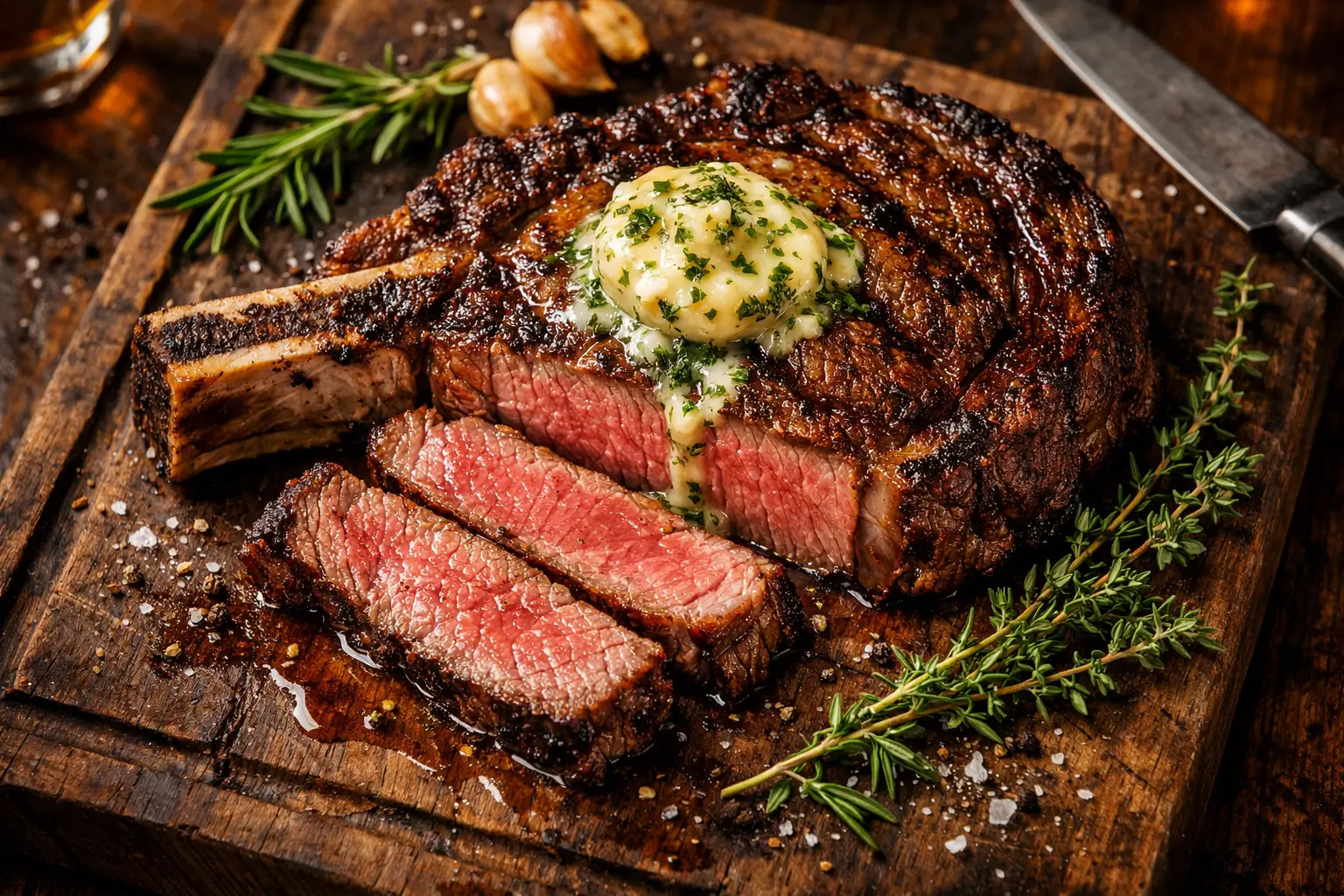
Ribeye Bone Steak: Tender, Flavorful, and Easy to Cook
Is the Ribeye Bone Steak Really the King of All Steaks?
Ask any serious steak lover to name the single greatest cut of beef, and the answer will almost always come back the same: ribeye bone steak. But here is what most people do not realize — you do not need a steakhouse kitchen or a professional grill setup to cook one perfectly at home.
In fact, a 2024 survey by the National Cattlemen’s Beef Association found that ribeye consistently ranks as the most ordered steak cut in American restaurants, yet fewer than 30% of home cooks feel confident preparing it themselves. This guide is here to change that.
The ribeye bone steak — also known as the bone-in ribeye or cowboy steak — is cut from the rib section of the cow, between ribs six and twelve. What makes it exceptional is its generous marbling: the thin ribbons of intramuscular fat that melt during cooking
basting the meat from the inside and producing a flavor depth that leaner cuts simply cannot match. The bone itself is not just for show. It insulates the meat near its edge during cooking, slowing heat penetration and resulting in a more evenly cooked, juicier steak.
In this complete guide, you will find everything you need to select, season, cook, and serve a ribeye bone steak that rivals anything you have ever eaten at a high-end steakhouse — at a fraction of the price.
Table of Contents
What You Need for the Perfect Ribeye Bone Steak
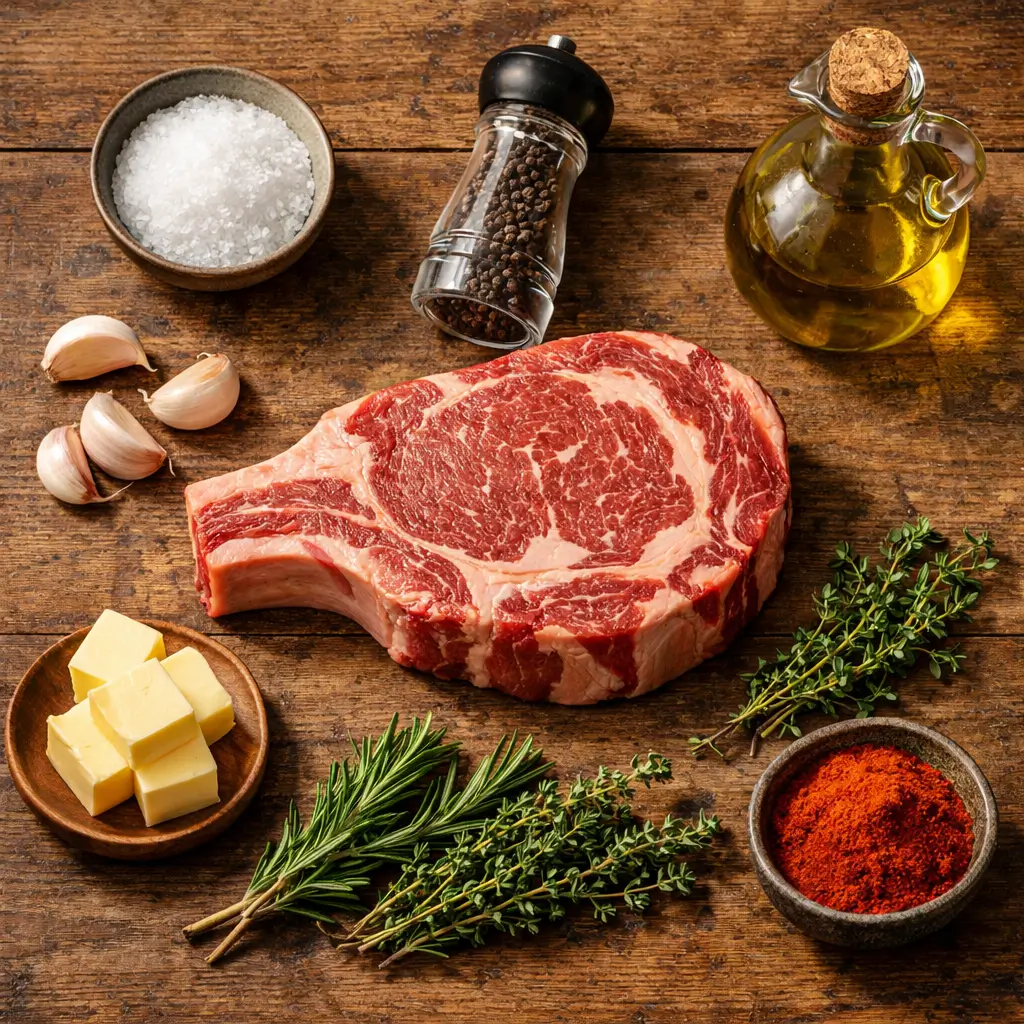
The ingredient list for a great ribeye bone steak is intentionally short. This is a cut that thrives on simplicity — the goal is to enhance what is already there, not to mask it. Here is what you need for 2 servings:
The Star of the Show
- 1 bone-in ribeye steak, 1.5 to 2 inches thick, approximately 24 to 32 oz — look for heavy marbling and a bright cherry-red color; USDA Prime or Choice grade will deliver the best results (sub: boneless ribeye if bone-in is unavailable, though you will sacrifice some of the edge-to-bone flavor complexity)
The Seasoning
- 2 tsp kosher salt — coarse kosher salt adheres better to the surface and draws out and reabsorbs moisture more effectively than fine table salt
- 1.5 tsp coarsely cracked black pepper — freshly cracked is non-negotiable; pre-ground pepper lacks the aromatic punch this steak deserves
- 1 tsp garlic powder — adds a subtle, savory depth without overpowering the beef
- 1/2 tsp smoked paprika — optional, but adds a faint smokiness that complements the char from searing
For the Basting Butter
- 3 tbsp unsalted butter — the foundation of the basting sauce that transforms a good steak into a great one
- 3 cloves garlic — lightly smashed, skin on
- 3 sprigs fresh rosemary (sub: fresh thyme, or a combination of both)
- 2 sprigs fresh thyme
For Cooking
- 1 tbsp neutral oil with a high smoke point — avocado oil, grapeseed oil, or refined vegetable oil; never olive oil for initial searing as it burns at high heat
Pro Tip: Pull your ribeye bone steak out of the refrigerator at least 45 minutes before cooking. Bringing the steak closer to room temperature promotes more even cooking from edge to center — a step that many home cooks skip and later regret.
Recipe Timing at a Glance
| Rest Before | Prep Time | Cook Time | Total Active Time |
| 45 minutes | 5 minutes | 10-14 minutes | ~20 minutes |
The active cooking time for this ribeye bone steak is just 20 minutes — significantly less than most people expect for a premium steakhouse-quality result. The 45-minute pre-rest period is passive time that requires no attention from you. Compare this to a traditional oven-roasted steak method, which typically takes 35 to 50 minutes of active preparation and cooking. The reverse-sear method described below is one of the most efficient and reliable ways to cook a thick steak at home.
Servings: 2 | Difficulty: Intermediate | Cuisine: American Steakhouse
Step-by-Step Instructions for Ribeye Bone Steak
Step 1: Season Generously and Rest
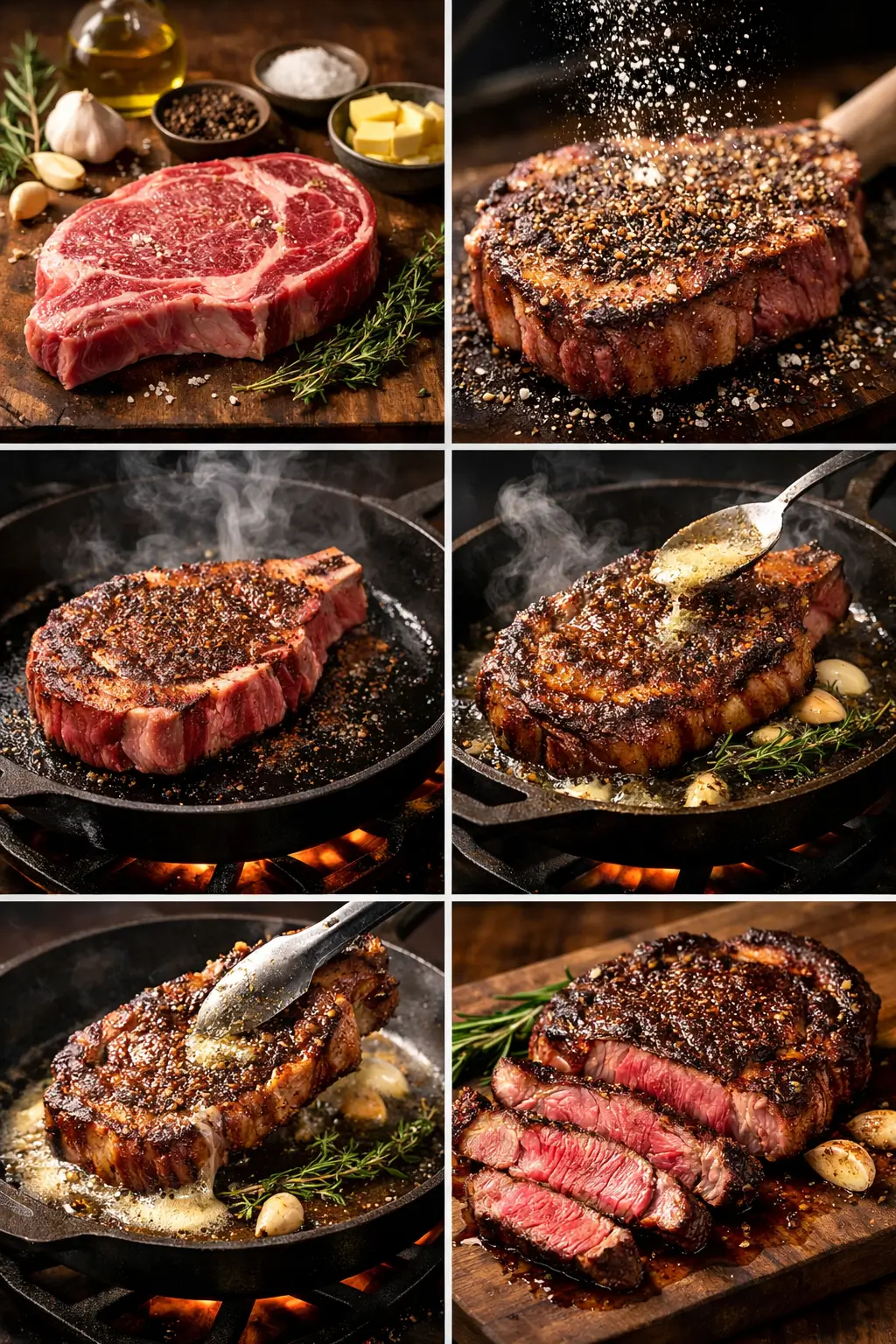
Pat your ribeye bone steak completely dry on all sides using paper towels. Moisture on the surface is the enemy of a good sear — it creates steam instead of crust. Once dry, season every surface liberally with kosher salt, cracked black pepper, garlic powder, and smoked paprika. Press the seasoning firmly into the meat so it adheres. Place the steak on a wire rack set over a baking sheet and allow it to rest at room temperature for 45 minutes. This step is not optional if you want even, consistent results. During this time, the salt begins to draw out a small amount of surface moisture, which then reabsorbs back into the meat, seasoning it from within.
Step 2: Preheat Your Pan to the Right Temperature
Place a cast-iron skillet or heavy stainless-steel pan over high heat for a full 3 to 5 minutes until it is genuinely ripping hot. You should see a faint shimmer rising from the surface. Add the tablespoon of high-smoke-point oil and swirl to coat. The oil should shimmer immediately and begin to smoke lightly within 30 seconds. This level of heat is what creates the Maillard reaction — the deep, brown, complex crust that is the defining characteristic of a great steak. A pan that is not hot enough will produce a grey, steamed exterior rather than a golden-brown sear.
Step 3: Sear the First Side
Carefully lay the ribeye bone steak away from you into the hot pan. You should hear an immediate, aggressive sizzle. Do not touch it, press it down, or move it for the first 3 to 4 minutes. Resist the urge to peek. The crust needs uninterrupted contact with the pan surface to develop properly. If you try to move the steak and it resists, it is not ready to flip — a properly seared steak releases naturally when the crust has formed. After 3 to 4 minutes, check the underside: it should be a deep, even mahogany brown across the entire surface.
Step 4: Flip and Baste
Flip the steak and immediately add the butter, smashed garlic cloves, rosemary, and thyme to the pan. As the butter melts and begins to foam, tilt the pan slightly toward you and use a large spoon to continuously baste the steak with the aromatic butter. Spoon the butter over the steak repeatedly and rapidly for the entire remaining cook time. This basting technique — known in French cooking as arroser — adds flavor, encourages even browning on the second side, and keeps the surface of the steak moist. Cook the second side for another 3 to 4 minutes for medium-rare.
Step 5: Sear the Edges and the Bone Side
Using tongs, hold the steak upright on its fat cap edge for 1 to 2 minutes to render the fat and develop color there as well. Then tilt it to sear briefly along the bone side. These final touches are what separate a truly complete cook from a rushed one. Every surface of the steak deserves attention.
Step 6: Rest Before Cutting
Transfer the steak to a clean cutting board and tent loosely with foil. Allow it to rest for a minimum of 8 to 10 minutes. This step is as important as the cooking itself. During resting, the muscle fibers relax and the internal juices redistribute evenly throughout the steak. Cut too soon and those juices flood out onto the board rather than staying in the meat where they belong. After resting, slice against the grain and serve immediately.
Nutritional Information (Per Serving — Approximately 12 oz Cooked)
Ribeye bone steak is a nutritionally dense food, particularly rich in protein, B vitamins, zinc, and iron. Here is the approximate nutritional profile per serving based on a 12-ounce cooked portion:
| Nutrient | Amount |
| Calories | ~720 kcal |
| Protein | 62g |
| Total Fat | 52g |
| Saturated Fat | 22g |
| Carbohydrates | 0g |
| Dietary Fiber | 0g |
| Sodium | ~780mg (from seasoning) |
| Zinc | 60% DV |
| Iron | 25% DV |
| Vitamin B12 | 110% DV |
| Vitamin B6 | 35% DV |
| Phosphorus | 30% DV |
Note: Values are estimates based on USDA data for broiled ribeye steak and will vary depending on the exact size of the cut and the grade of beef. The basting butter adds approximately 100 to 150 additional calories depending on how much is absorbed.
The protein content alone — 62 grams per serving — makes this one of the most protein-dense single-ingredient meals available. The high vitamin B12 content supports neurological function and red blood cell production, while the zinc content plays a key role in immune system health.
Healthier Alternatives for the Ribeye Bone Steak
Ribeye is an indulgent cut by nature, but there are meaningful ways to enjoy it more frequently within a balanced diet:
- Reduce the portion size — a 6 to 8 ounce serving of ribeye is still deeply satisfying and cuts calories and saturated fat roughly in half. Pair it with a larger volume of vegetables to create a balanced plate.
- Trim visible external fat before cooking — while marbling within the muscle adds flavor and cannot be removed, the thick external fat cap can be trimmed to reduce overall fat content without significantly impacting taste.
- Use herb oil instead of butter for basting — combine olive oil, minced garlic, rosemary, and thyme for a dairy-free basting option that adds flavor with less saturated fat.
- Balance the plate with fiber-rich sides — pair your ribeye with roasted vegetables, a large green salad, or steamed broccoli to offset the richness and add micronutrients the steak alone does not provide.
- Opt for grass-fed beef when available — grass-fed ribeye tends to have a slightly higher omega-3 to omega-6 ratio compared to grain-finished beef, and many nutritionists consider it a marginally healthier choice.
- Limit frequency rather than portion size — enjoying a full ribeye bone steak once or twice a month as part of an otherwise balanced diet is a reasonable approach that does not require compromising the experience.
Serving Suggestions That Do Justice to the Steak
A ribeye bone steak is a centerpiece meal. What you pair it with should complement its richness without competing with it. Here are the best options:
- Classic Steakhouse Sides — Creamy mashed potatoes, sauteed mushrooms in garlic butter, and creamed spinach are the holy trinity of ribeye accompaniments. Rich, warm, and deeply satisfying.
- Crispy Roasted Potatoes — Toss baby potatoes with olive oil, rosemary, and flaky salt, then roast at 425 degrees Fahrenheit until golden. They soak up the steak’s resting juices beautifully when plated together.
- Simple Green Salad — A crisp arugula salad dressed with lemon juice, olive oil, shaved Parmesan, and cracked pepper cuts through the richness of the steak and refreshes the palate between bites.
- Grilled Asparagus or Broccolini — Char them in the same cast-iron pan after removing the steak for a smoky, savory vegetable side that requires almost no additional effort.
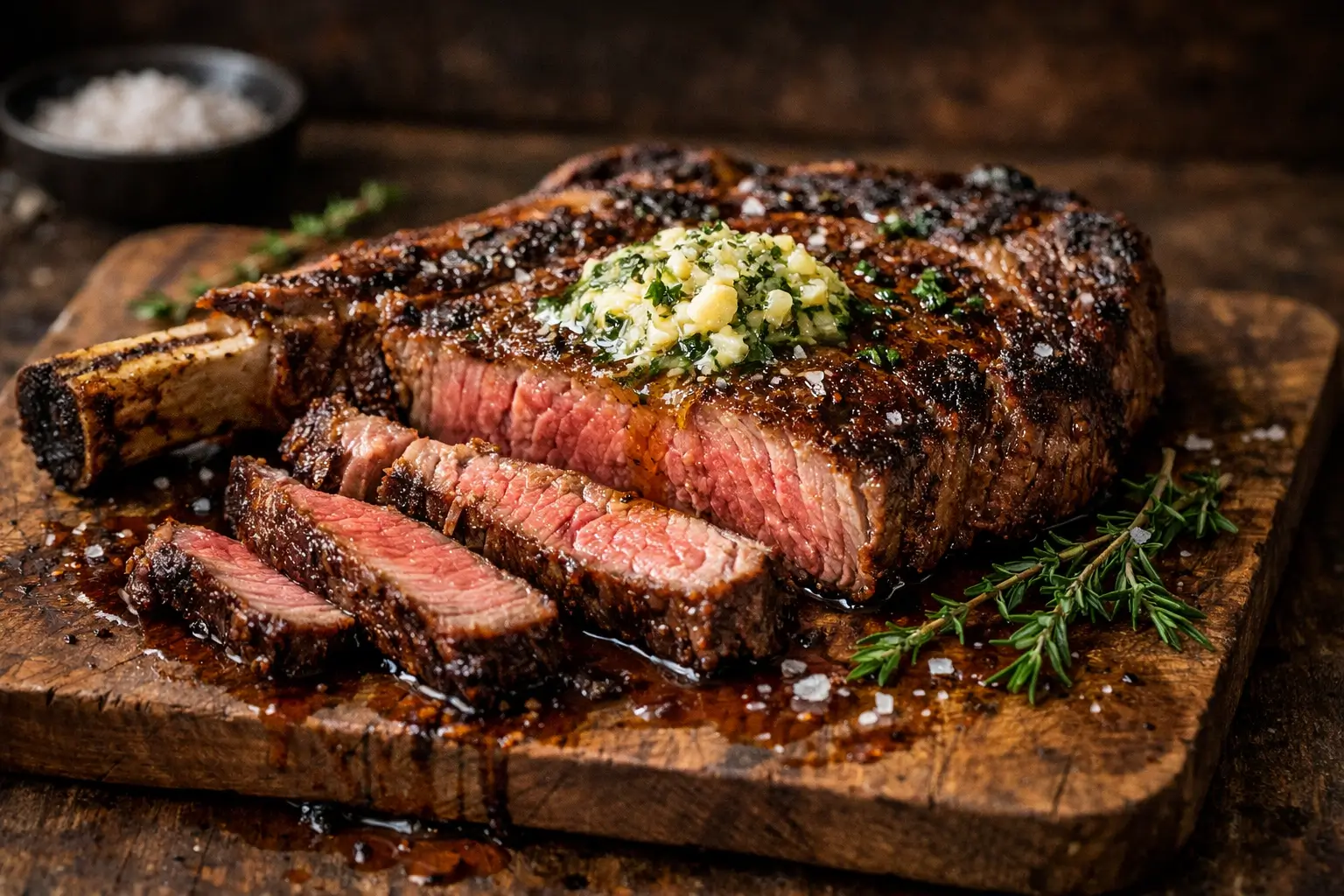
- Compound Butter Finish — Top the rested steak with a slice of homemade compound butter — try blue cheese butter, truffle butter, or a simple herb butter with parsley, lemon zest, and garlic — for a steakhouse-worthy presentation.
- Wine Pairing — A full-bodied red wine such as Cabernet Sauvignon, Malbec, or Syrah pairs exceptionally well with the fat content and bold flavor of a ribeye bone steak. The tannins in the wine interact with the steak’s proteins in a way that enhances both.
Common Mistakes to Avoid
Cooking a premium cut of beef correctly is well within any home cook’s capability — but only if you avoid the mistakes that consistently derail the result:
1. Cooking a cold steak: Taking a ribeye straight from the refrigerator to a hot pan leads to an overcooked exterior before the center reaches temperature. Always rest the steak at room temperature for at least 45 minutes before cooking.
2. Using a pan that is not hot enough: A medium-heat pan will not generate the Maillard reaction needed for a proper crust. The pan must be smoking hot before the steak goes in. Preheat it for at least 3 to 5 minutes over high heat.
3. Moving the steak too frequently: Flipping the steak multiple times disrupts crust formation. For a steak of this thickness, one flip is all you need. Let the crust build.
4. Pressing the steak down with a spatula: This is a common instinct but a costly mistake. Pressing squeezes the juices out of the meat and onto the pan, where they vaporize and are lost forever.
5. Skipping the resting period: Cutting into the steak immediately after cooking causes the internal juices — which have been driven toward the center by heat — to pour out onto the cutting board. Rest for at least 8 to 10 minutes.
6. Under-seasoning: A steak this thick requires more seasoning than you think feels comfortable. The exterior must be well seasoned because only the outer layers of the meat are directly in contact with the seasoning.
7. Using the wrong equipment: A thin, lightweight pan cannot retain heat when a cold, heavy steak is placed in it. The temperature drop prevents proper searing. Always use cast iron or heavy stainless steel.
Storing Tips for Your Ribeye Bone Steak
A ribeye bone steak of this quality is best enjoyed immediately after cooking, but here is how to handle leftovers and prep-ahead scenarios without losing quality:
Refrigerating Cooked Steak
Allow the steak to cool to room temperature — no longer than 2 hours after cooking — then wrap it tightly in aluminum foil or transfer to an airtight container. Refrigerate for up to 3 days. To reheat without overcooking, place the wrapped steak on a wire rack in a 250 degree Fahrenheit oven for 20 to 25 minutes until warmed through, then sear briefly in a hot pan for 1 minute per side to restore the crust. This low-and-slow reheating method preserves tenderness far better than microwaving.
Freezing
Cooked ribeye can be frozen for up to 2 months. Wrap it tightly in plastic wrap, then in a layer of foil, and place in a freezer bag with the air pressed out. Thaw overnight in the refrigerator before reheating as described above. Be aware that the texture of a previously cooked and frozen ribeye will be slightly less juicy than fresh, but it remains a solid option for avoiding waste on an expensive cut.
Storing Uncooked Ribeye
If you purchase your ribeye bone steak ahead of time, keep it in its original vacuum-sealed packaging and refrigerate for up to 3 to 5 days. For longer storage, freeze it in the original packaging or rewrap tightly in plastic wrap and foil. A properly frozen ribeye steak maintains good quality for up to 6 months. Thaw in the refrigerator — never at room temperature — for 24 to 48 hours before cooking.
Leftover Ideas
Sliced leftover ribeye is exceptional in a breakfast hash with diced potatoes and eggs, layered into a steak sandwich with caramelized onions and provolone, or chopped and tossed into a warm grain bowl with arugula and horseradish dressing.
Final Thoughts: Your Steakhouse Dinner Starts at Home
Ribeye bone steak is the pinnacle of home cooking — rich marbling, bold flavor, and a bone that makes every bite better. With the right technique, a hot pan, and a little patience, you can achieve steakhouse results in your own kitchen tonight. Give it a try and experience the difference.
Did you cook this ribeye bone steak recipe? We want to hear about it. Leave a rating and a comment in the review section below, share this post with a fellow steak lover, and subscribe to our newsletter for weekly recipes, cooking techniques, and kitchen inspiration delivered straight to your inbox.
>>> Subscribe for New Recipes Every Week!
Frequently Asked Questions (FAQs)
Q: What is the difference between a bone-in ribeye and a boneless ribeye? The bone-in ribeye — also called a cowboy steak or cowboy ribeye — includes the rib bone, which insulates the surrounding meat during cooking and contributes a slightly deeper, more complex flavor near the bone. Boneless ribeye is easier to slice and cook evenly throughout, but many steak enthusiasts argue that the bone-side meat is the most flavorful bite on the plate. Both are excellent; the choice comes down to personal preference.
Q: What internal temperature should a ribeye bone steak reach? For medium-rare — the recommended doneness for ribeye — pull the steak from the heat when an instant-read thermometer reads 130 degrees Fahrenheit. It will continue to rise 5 to 10 degrees during the resting period, finishing at 135 to 140 degrees Fahrenheit. For medium, pull at 140 degrees Fahrenheit. Avoid cooking a ribeye past medium; the fat begins to render out rather than melt within the muscle, resulting in a drier, less flavorful steak.
Q: Can I cook a ribeye bone steak on a grill instead of a skillet? Absolutely, and for many cooks, the grill is the preferred method. Preheat your grill to high heat, oil the grates, and cook for 4 to 5 minutes per side over direct heat for a 1.5-inch steak. Use the same resting principle. For thicker cuts, consider the reverse-sear method: start the steak on indirect heat until it reaches 115 degrees Fahrenheit internally, then sear directly over high heat for 1 to 2 minutes per side.
Q: How do I know which grade of ribeye to buy? USDA Prime is the highest grade and features the most extensive marbling — it is what top steakhouses use. USDA Choice is the most widely available and still excellent, offering good marbling at a more accessible price. USDA Select is leaner and less marbled; it is not recommended for ribeye, where marbling is the primary driver of flavor. When possible, choose Prime or high-end Choice for this recipe.
Q: Why is my ribeye bone steak tough? Toughness in a ribeye is almost always caused by one of two things: the steak was cooked past medium (the fat renders out rather than staying in the muscle), or it was not rested long enough after cooking (the muscle fibers had not relaxed before cutting). A ribeye cooked to medium-rare and rested for 8 to 10 minutes should be exceptionally tender.
Q: Can I season the steak the night before? Yes, and it is actually recommended for the best results. Salting the steak 24 hours in advance — known as dry brining — draws out a small amount of surface moisture, which then dissolves the salt and is reabsorbed back into the meat. This seasons the steak more deeply than last-minute salting and produces a drier surface that sears more effectively. Simply season, place on a wire rack, and refrigerate uncovered overnight.
Q: What is the best pan for cooking ribeye at home? A well-seasoned cast-iron skillet is the gold standard for stovetop ribeye cooking. It retains heat exceptionally well, distributes it evenly, and goes from stovetop to oven seamlessly if needed. Heavy stainless steel is an excellent second choice. Avoid non-stick pans for this recipe — they cannot withstand the high heat required for a proper sear and will degrade at the temperatures needed.
Related Recipes You Might Love:
- Easy Pepper Steak Stir-Fry
- Garlic Butter New York Strip Steak
- Reverse-Sear Tomahawk Ribeye
- Classic Steakhouse Creamed Spinach
A great steak is one of life’s simplest pleasures. Cook it right, and it never disappoints.