
The Best Fluffy Pancakes recipe you will fall in love with. Full of tips and tricks to help you make the best pancakes.

That is the quiet promise behind every great recipe for salmon patties — and it is one that delivers every single time. According to data from the USDA Economic Research Service, canned salmon is one of the most cost-effective sources of high-quality protein available in American grocery stores, yet it remains dramatically underused in everyday home cooking.
Most households walk past it entirely, reaching for tuna without a second thought. What they are missing is a recipe for salmon patties that produces a golden, crackling crust on the outside and a moist, flavorful interior that no tuna substitute can replicate.
This is not a complicated dish. It does not require a culinary background, special equipment, or a long ingredient list. What it does require is a clear, well-tested recipe and an understanding of the few small details that separate patties that fall apart from ones that hold together perfectly, and patties that taste flat from ones that are genuinely crave-worthy.
This guide covers all of it — from ingredients and timing to step-by-step instructions, nutritional information, healthier swaps, serving ideas, and the most common questions home cooks have before they start.If you have been looking for a reliable, repeatable recipe for salmon patties that works the first time and every time after, this is it.
Table of Contents
4.7 out of 5 stars (based on 15 reviews)
Ingredients for This Recipe for Salmon Patties
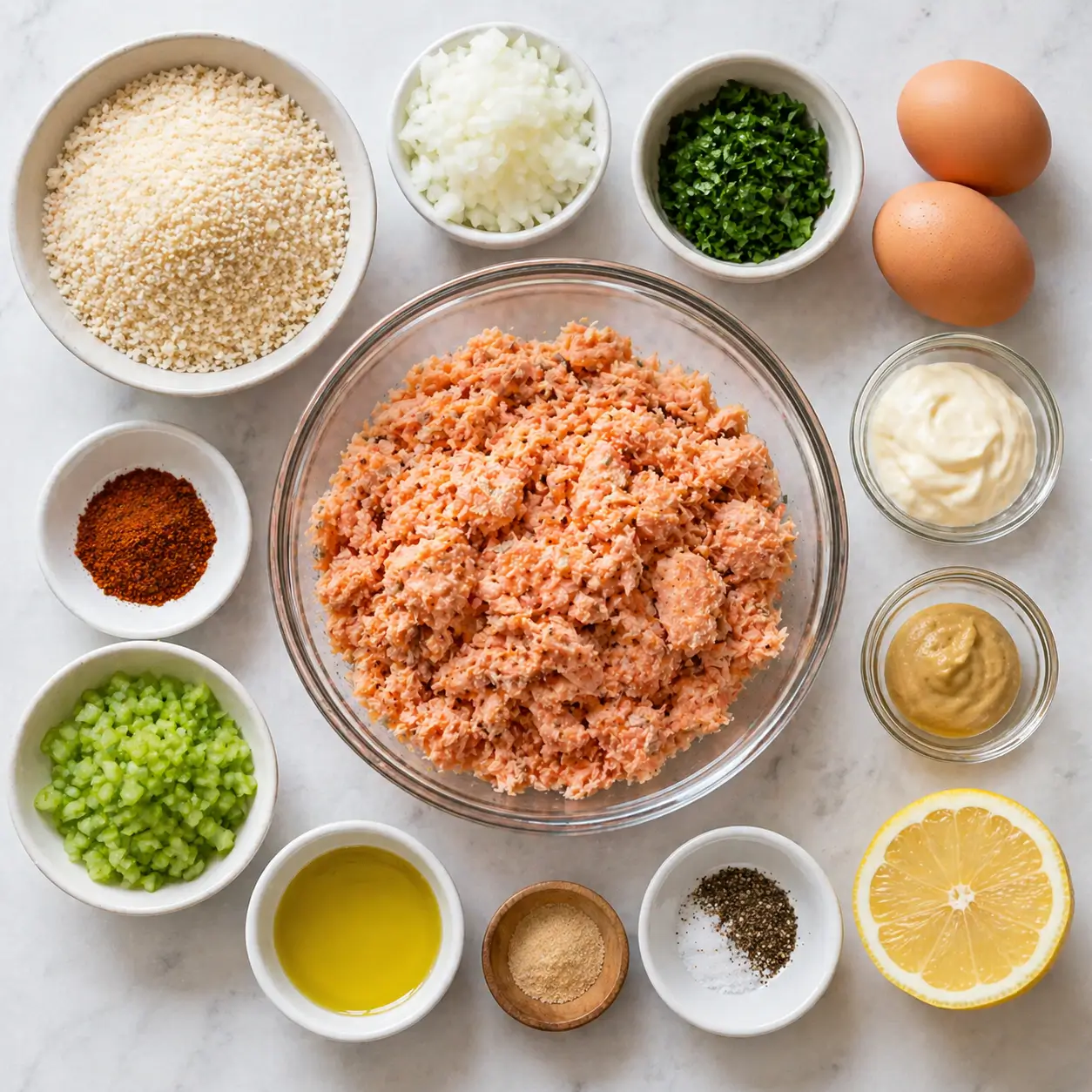
The ingredient list is intentionally concise. Everything here serves a specific purpose, and every substitution suggestion has been chosen to preserve the texture and flavor of the finished patty. This recipe makes 8 patties, serving 4 people.
The Salmon Base
- 2 cans (14.75 oz each) pink or red sockeye salmon — drained thoroughly, skin removed, large bones removed (sub: 1.5 lbs of cooked fresh salmon, cooled and flaked; or canned tuna as a budget alternative, though the flavor profile differs noticeably)
- 2 large eggs — the primary binder that holds the patty mixture together during cooking; without them the patties will not hold their shape
- 1/3 cup mayonnaise — adds richness and moisture that keeps the interior of each patty tender rather than dry (sub: plain Greek yogurt for a lighter, higher-protein version)
Binders and Structure
- 1/2 cup panko breadcrumbs — panko produces a noticeably lighter, crispier crust than standard breadcrumbs due to its coarser, flakier texture (sub: plain breadcrumbs, crushed saltine crackers, or almond flour for a gluten-free adaptation)
- 2 tbsp Dijon mustard — sharpens the overall flavor profile and adds a subtle complexity that elevates the patties well beyond basic
- 1 tbsp Worcestershire sauce — contributes a deep, savory umami note that anchors the seasoning
Aromatics and Seasoning
- 1/4 cup yellow onion — finely diced; provides gentle sweetness and aromatic depth without overpowering the salmon
- 2 tbsp fresh parsley — finely chopped (sub: 1 tsp dried parsley, though fresh adds both color and a brighter flavor)
- 1 tsp garlic powder
- 1/2 tsp smoked paprika — adds warmth, color, and a faint smokiness that complements the salmon beautifully
- 1/2 tsp black pepper — freshly cracked
- Salt to taste — start conservatively, as canned salmon varies significantly in sodium content across brands
- 1 tbsp fresh lemon juice — essential; the acidity brightens every other flavor in the mixture and gives the finished patty a clean, fresh finish
For Cooking
- 2 tbsp butter — for flavor and golden color on the exterior crust
- 1 tbsp olive oil — combined with the butter to raise the smoke point and prevent burning
Pro Tip: Before mixing your ingredients, taste your canned salmon directly from the can. Some brands are notably saltier than others. Adjust the amount of added salt in your mixture accordingly, or omit it entirely if the salmon is already well seasoned.
Recipe Timing at a Glance
| Chill Time | Prep Time | Cook Time | Total Active Time |
| 15 minutes | 10 minutes | 12 minutes | ~22 minutes |
The total active time for this recipe for salmon patties is approximately 22 minutes — placing it among the fastest protein-centered dinner recipes available to home cooks. The 15-minute chill period is passive time that requires no effort from you and can be spent preparing side dishes or setting the table.
For comparison, the average pan-fried fish cake recipe requires closer to 35 to 40 minutes of active preparation and cooking. This recipe is nearly 40% faster without sacrificing any quality.
Servings: 4 (8 patties) | Difficulty: Beginner-Friendly | Cuisine: American Classic
Step-by-Step Instructions: Recipe for Salmon Patties
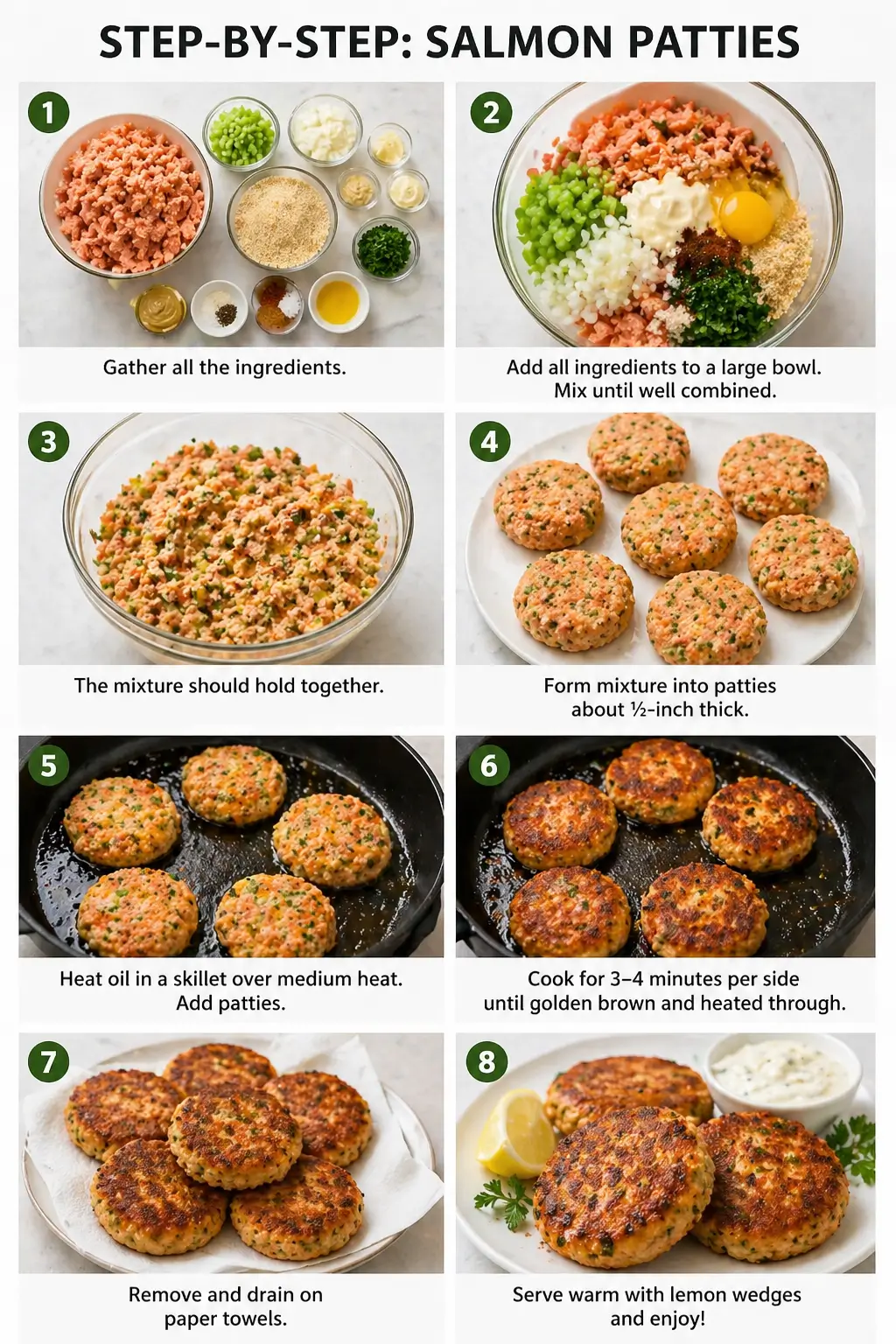
Step 1: Prepare and Drain the Salmon
Open both cans of salmon and drain them as thoroughly as possible. This step is more important than most home cooks realize — excess moisture in the mixture is the leading cause of patties that fall apart in the pan. Press the salmon firmly against the can lid or push it through a fine-mesh strainer to remove every drop of liquid you can.
Transfer the drained salmon to a large mixing bowl. Remove the skin and any large bones you encounter. The small, soft pin bones are entirely safe to eat and actually add calcium to the dish, but remove them if you prefer a smoother texture. Use a fork to flake the salmon into small, consistent pieces.
Step 2: Combine the Mixture
Add the eggs, mayonnaise, Dijon mustard, Worcestershire sauce, diced onion, parsley, garlic powder, smoked paprika, pepper, and lemon juice to the bowl with the salmon. Stir gently until everything is evenly incorporated. Now fold in the panko breadcrumbs.
The finished mixture should feel moist and cohesive — when you press a handful together, it should hold its shape without crumbling or feeling wet. If the mixture feels too loose, add breadcrumbs one tablespoon at a time until the consistency is right. If it feels too dry, add a small spoonful of mayonnaise. Getting this balance right is the foundation of a patty that holds together through cooking.
Step 3: Form and Chill the Patties
Divide the mixture into 8 equal portions. With lightly dampened hands, roll each portion into a ball and then press it gently into a patty approximately 3/4 inch thick and 3 inches in diameter. Consistent thickness across all patties is important — it ensures every one cooks evenly and finishes at the same time.
Arrange the formed patties on a parchment-lined plate or baking sheet and refrigerate for a minimum of 15 minutes. Chilling firms the mixture and gives the breadcrumbs time to absorb moisture from the surrounding ingredients, which significantly improves how well the patties hold together during cooking. Do not skip this step.
Step 4: Cook to Golden Perfection
Heat the butter and olive oil together in a large skillet over medium to medium-high heat. Allow the butter to melt completely and the foam to subside before adding the patties — this ensures the pan surface is evenly coated and at the right temperature. Carefully place the chilled patties in the pan, leaving clear space between each one.
Cook without moving or pressing them for 3 to 4 minutes until the underside is deeply golden brown. Slide a thin spatula underneath each patty and flip in one confident, smooth motion. Cook the second side for another 3 to 4 minutes until equally golden. Transfer to a wire rack rather than a plate to allow air circulation on all sides and prevent the bottom crust from softening.
Step 5: Rest Briefly and Serve
Allow the patties to rest on the wire rack for 2 minutes after cooking. This brief rest lets the interior settle and makes the patties easier to handle without breaking. Finish with a light squeeze of fresh lemon juice over the tops and a scatter of fresh parsley. Serve immediately while the crust is at its crispiest. Refer to the serving suggestions section below for pairing ideas that complement this recipe for salmon patties across a range of occasions and preferences.
Nutritional Information (Per Serving — 2 Patties)
This recipe for salmon patties is as nutritious as it is delicious. Salmon is one of the most omega-3-rich foods available in any form, and the canned version retains virtually all of those nutritional benefits at a fraction of the cost of fresh. Here is the approximate breakdown per serving of 2 patties:
| Nutrient | Amount |
| Calories | ~305 kcal |
| Protein | 29g |
| Total Fat | 15g |
| Saturated Fat | 4g |
| Carbohydrates | 13g |
| Dietary Fiber | 1g |
| Sugars | 1g |
| Sodium | ~560mg |
| Omega-3 Fatty Acids | ~1,900mg |
| Vitamin D | 85% DV |
| Calcium | 28% DV |
| Vitamin B12 | 95% DV |
Note: Nutritional values are estimates based on standard ingredient quantities and will vary depending on specific brands, the exact size of each patty, and how much butter is absorbed during cooking. Values do not include dipping sauces or side dishes.
The omega-3 fatty acid content of approximately 1,900 milligrams per serving exceeds the American Heart Association’s weekly recommendation for omega-3 intake in a single meal. Combined with nearly a full day’s supply of vitamin B12 and a significant calcium contribution from the soft bones in canned salmon, this recipe for salmon patties is one of the most nutritionally complete quick meals you can make at home.

Healthier Alternatives for This Recipe for Salmon Patties
The recipe is already a strong nutritional choice, but these modifications make it even more adaptable across different dietary goals and preferences:
- Replace mayonnaise with plain Greek yogurt — cuts the fat content roughly in half per serving while adding protein and a slight tang that works well with the lemon and Dijon. Use the same quantity as a direct substitution.
- Use almond flour instead of panko breadcrumbs — reduces carbohydrates significantly and makes the recipe grain-free. The texture of the finished patty is slightly denser but still cohesive and satisfying.
- Bake instead of pan-fry — arrange formed patties on a greased wire rack set over a baking sheet, spray lightly with cooking spray, and bake at 400 degrees Fahrenheit for 20 to 22 minutes, flipping once at the halfway mark. Fat content drops noticeably while flavor remains strong.
- Air fryer method — spray patties with cooking spray and cook at 375 degrees Fahrenheit for 10 to 12 minutes, flipping once. Produces a genuinely crispy exterior with minimal added fat — a reduction of approximately 60% compared to pan-frying in butter.
- Add finely grated zucchini or carrot to the mixture — increases fiber and micronutrient content, adds moisture, and stretches the recipe further. Squeeze grated zucchini in a clean towel before adding to remove excess moisture.
- Use wild-caught salmon over farmed when budget allows — wild-caught canned salmon typically has a higher omega-3 to omega-6 ratio and is considered a marginally better nutritional choice by most dietitians and nutrition researchers.
- Dairy-free adaptation — replace the butter with a neutral cooking oil such as avocado oil or refined coconut oil. The crust color will be slightly lighter but the flavor remains excellent.
Serving Suggestions for Every Occasion
One of the greatest strengths of this recipe for salmon patties is how well it adapts to different serving contexts. Here are ideas that work across everything from a quick weeknight dinner to a relaxed weekend brunch:
- Classic Plate — Serve two patties alongside creamy coleslaw, a wedge of lemon, and a simple green salad. Clean, balanced, and deeply satisfying without any fuss.
- Salmon Patty Sandwich — Place a patty on a toasted brioche or potato bun with butter lettuce, sliced tomato, red onion, and a generous spread of tartar sauce or lemon-dill aioli. Rivals any fish sandwich available commercially.
- Over Mixed Greens — Rest two warm patties on a bed of arugula or mixed greens with sliced cucumber, cherry tomatoes, and a light lemon vinaigrette. A protein-packed lunch that feels genuinely restaurant-quality.
- With Roasted Vegetables — Pair with oven-roasted asparagus, broccolini, or green beans for a complete, nutrient-dense dinner plate that comes together in the same amount of time as the patties.
- Grain Bowl — Serve over brown rice or quinoa with sliced avocado, shredded purple cabbage, pickled red onion, and a drizzle of sriracha mayo for a modern, visually appealing presentation.
- Brunch Style — Serve a patty alongside two poached eggs and wilted spinach on a toasted English muffin for a seafood-forward eggs Benedict variation that is genuinely impressive and surprisingly easy to execute.
Whichever presentation you choose, a squeeze of fresh lemon directly over the finished patties immediately before serving is the single most effective finishing touch. It brightens every flavor in the dish and makes the difference between a good result and a great one.
Common Mistakes to Avoid
This recipe for salmon patties is forgiving by nature, but the same handful of errors appear consistently among home cooks who struggle with the results. Here is what to watch for:
1. Insufficient draining of the canned salmon: Wet salmon produces a mixture that will not bind reliably, leading to patties that crack or collapse in the pan. Press firmly and drain thoroughly every time, without exception.
2. Skipping the refrigeration step: Chilling the formed patties for even 15 minutes before cooking is the single most effective way to ensure they hold together during the sear. The cold firms the mixture and improves structural integrity dramatically.
3. Attempting to flip too early: A patty that sticks when you try to flip it is telling you it is not ready. A properly seared patty releases cleanly from the pan surface when a crust has formed. Patience here is always rewarded.
4. Overcrowding the pan: Too many patties in the pan simultaneously drops the cooking temperature and causes them to steam rather than sear, producing a pale, soft exterior instead of a golden, crispy one. Cook in two batches if necessary.
5. Mixing aggressively: Salmon patties benefit from gentle folding rather than vigorous stirring. Overworking the mixture breaks the salmon flakes down into a paste, resulting in a denser, less appealing texture in the finished patty.
6. Neglecting to season the mixture adequately: Canned salmon is mild in flavor. The mustard, Worcestershire, lemon juice, and spices are what give this recipe its character. Taste the mixture before forming patties and adjust seasoning if needed.
7. Draining on paper towels: Paper towels trap steam beneath the cooked patties, which softens the crust rapidly. Always transfer to a wire rack after cooking to maintain crispiness until serving.
Storing Tips for Your Salmon Patties
This recipe for salmon patties stores and reheats exceptionally well, making it an ideal candidate for meal prep and planned leftovers throughout the week.
Refrigerating Cooked Patties
Allow cooked patties to cool completely to room temperature before storing — never seal warm patties in a container, as the trapped steam will soften the crust irreversibly. Layer them in an airtight container with parchment paper between each layer to prevent sticking.
Refrigerate for up to 3 days. To reheat and restore the crispy exterior, place patties on a wire rack over a baking sheet and bake at 400 degrees Fahrenheit for 8 to 10 minutes. Avoid microwaving if crispiness matters to you — it works in a pinch but significantly softens the crust and can make the texture rubbery.
Freezing Cooked Patties
Salmon patties freeze well for up to 2 months. Cool completely, then freeze in a single layer on a parchment-lined baking sheet until solid, approximately 1 to 2 hours. Transfer to a freezer-safe bag or airtight container with parchment between layers and label with the date. Thaw overnight in the refrigerator and reheat in the oven as described above. The texture after freezing is slightly softer than fresh but still very good, and the flavor holds up well.
Freezing Uncooked Patties
The uncooked mixture can be formed into patties, frozen on a baking sheet until solid, and then stored in a freezer bag for up to 2 months. Cook directly from frozen in a skillet over medium heat, adding 2 to 3 extra minutes per side to ensure the center heats through fully. This make-ahead approach turns a 22-minute recipe into a 15-minute one on busy evenings.
Make-Ahead Strategy
The full mixture can be prepared and refrigerated, covered tightly with plastic wrap, for up to 24 hours before forming and cooking. The extended refrigeration actually improves the flavor as the ingredients meld together. Form the patties and cook when ready — the chill time requirement is already satisfied by the overnight rest.
Final Thoughts: The Only Recipe for Salmon Patties You Will Ever Need
This recipe for salmon patties delivers a golden, crispy crust, a tender and flavorful interior, and a nutritional profile that is genuinely impressive — all in under 25 minutes of active cooking. Affordable, versatile, and endlessly adaptable, it belongs in every home cook’s permanent rotation. Make it tonight and taste the difference.
Did this recipe for salmon patties hit the mark in your kitchen? Leave a rating and share your experience in the comment section below. Tell us what sides you paired it with, any swaps you tried, and how it turned out. Share this post with someone who loves a great seafood recipe, and subscribe to our newsletter for new recipes, cooking guides, and kitchen tips delivered to your inbox every week.
>>> Subscribe for New Recipes Every Week!
Frequently Asked Questions (FAQs)
Q: What type of canned salmon works best in this recipe for salmon patties? Both pink salmon and red sockeye salmon produce excellent results. Red sockeye has a richer, more pronounced flavor and a deeper color that makes the finished patties visually striking. Pink salmon is milder, lighter in color, and typically less expensive. Either works well in this recipe — choose based on your flavor preference and budget. Avoid smoked salmon for this recipe, as its texture and salt content are not suited to patty formation.
Q: Why do my salmon patties keep falling apart? The three most common causes are insufficient draining of the canned salmon, skipping the refrigeration step after forming, and a mixture that is too wet. Address all three: drain the salmon as thoroughly as possible, always chill the formed patties for at least 15 minutes before cooking, and adjust the breadcrumb quantity if the mixture feels loose. Following these steps consistently eliminates the falling-apart problem in virtually every case.
Q: Can I use fresh salmon instead of canned in this recipe? Yes. Cook approximately 1.5 pounds of fresh salmon — baked, poached, or pan-seared — and allow it to cool completely before flaking. Remove all skin and bones before adding to the mixture. Fresh salmon produces a slightly richer flavor and a softer, more delicate texture compared to canned. The rest of the recipe remains identical. If using fresh salmon, be especially careful with salt levels as fresh salmon contains no added sodium.
Q: Can I make salmon patties without breadcrumbs? Yes. Crushed saltine crackers are the most traditional substitute and work extremely well. Almond flour is the best option for a grain-free or gluten-free version — use the same quantity and follow the recipe as written. Oat flour, crushed rice crackers, and gluten-free panko are all effective alternatives that produce slightly different textures but hold together reliably.
Q: How do I know when the salmon patties are fully cooked? Since canned salmon is already fully cooked, you are primarily cooking for texture and crust development rather than food safety. Visually, the patty should be deeply golden brown on both sides and feel firm — not soft or yielding — when pressed gently in the center. If using fresh salmon in the mixture, verify with an instant-read thermometer that the internal temperature has reached 145 degrees Fahrenheit.
Q: Can I bake these salmon patties instead of frying them? Yes, and it is a popular modification for those reducing their fat intake. Preheat the oven to 400 degrees Fahrenheit, place the formed patties on a greased wire rack set over a baking sheet, spray the tops with cooking spray, and bake for 20 to 22 minutes, flipping once at the halfway point. The crust will not be quite as deeply golden or as crackling crispy as the pan-fried version, but the flavor and structure are both excellent.
Q: What sauces pair best with this recipe for salmon patties? Classic tartar sauce is the traditional pairing and works beautifully with the lemon and herb notes in the patties. A homemade lemon-dill yogurt sauce — Greek yogurt, fresh dill, lemon juice, garlic, and a pinch of salt — is a fresher, lighter alternative that complements the salmon without overpowering it. Remoulade, chipotle aioli, honey mustard, and tzatziki are all excellent options depending on the direction you want to take the meal.
Related Recipes You Might Love: