The Best Fluffy Pancakes recipe you will fall in love with. Full of tips and tricks to help you make the best pancakes.

If you’re looking for the best Mongolian beef recipe that’s easy, fast, and better than takeout, you’re in the right place. This homemade Mongolian beef comes together in under 30 minutes with tender slices of beef coated in a rich, sweet-savory sauce that tastes just like your favorite Chinese restaurant — if not better.
Made with simple pantry ingredients like soy sauce, garlic, ginger, and brown sugar, this easy Mongolian beef recipe delivers bold flavor without complicated steps. Whether you’re cooking a quick weeknight dinner or trying to impress guests, this dish is guaranteed to become a go-to favorite in your kitchen.
Table of Contents
4.7 out of 5 stars (based on 15 reviews)
Ingredients for the Mongolian Beef Recipe
This recipe uses straightforward, widely available ingredients. The magic is not in unusual components — it is in the ratios and technique. The following quantities serve 4 people.
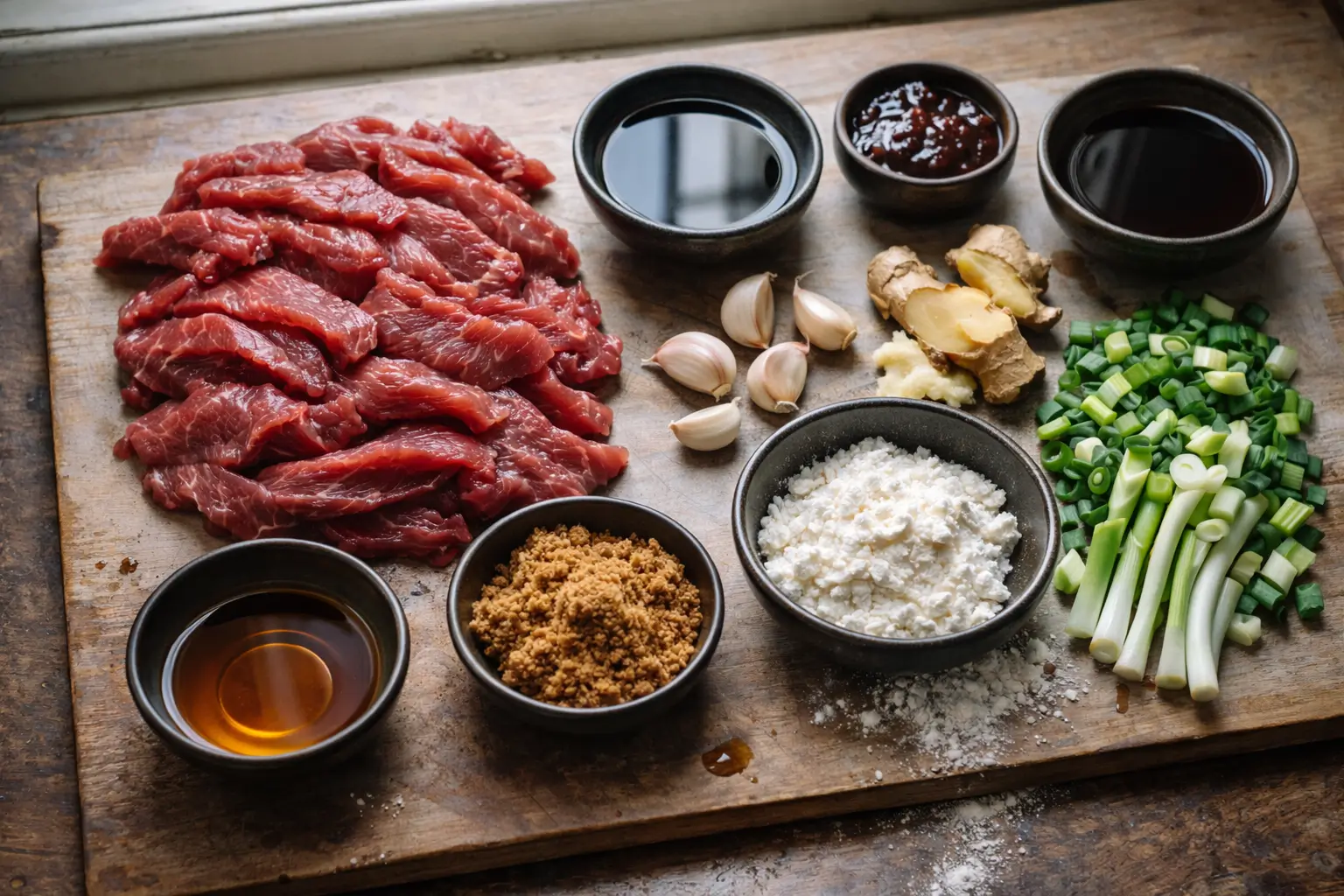
The Beef
- 1.5 lbs flank steak — sliced against the grain into thin strips, approximately 1/4 inch thick (sub: sirloin, skirt steak, or flat iron steak; all work well when sliced thin; avoid thick cuts like ribeye which do not stir-fry as effectively)
The Beef Coating
- 1/3 cup cornstarch — coats the beef before frying, creating the velvety exterior texture and helping the sauce cling to each piece
- 1/2 tsp black pepper
- 1/4 tsp salt
The Mongolian Sauce
- 1/2 cup low-sodium soy sauce — the umami backbone of the entire dish (sub: coconut aminos for a gluten-free, lower-sodium alternative)
- 1/3 cup brown sugar, packed — creates the caramel sweetness and glossy finish that defines Mongolian beef sauce (sub: coconut sugar or honey for a slightly less refined sweetness)
- 1/4 cup water
- 1 tbsp hoisin sauce — adds depth, a faint sweetness, and a subtle fermented complexity
- 1 tsp sesame oil — added off the heat at the end; it provides a toasty, nutty finish that rounds out the sauce
- 1/2 tsp red pepper flakes — optional, for a gentle background heat that balances the sweetness
The Aromatics
- 5 cloves garlic — minced finely; this is not the place to be conservative with garlic
- 1 tbsp fresh ginger — grated (sub: 1/2 tsp ground ginger, though fresh delivers significantly more brightness)
- 4 green onions — sliced on a diagonal, whites and greens separated; whites go into the pan early, greens are used as a garnish
For Cooking
- 1/3 cup vegetable oil or canola oil — used to flash-fry the cornstarch-coated beef before the sauce stage; this step is what gives the beef its characteristic exterior texture
Pro Tip: Freeze your flank steak for 20 to 30 minutes before slicing. A partially frozen steak is significantly easier to slice into thin, even strips than a fully thawed one — and even cuts lead to even cooking.
Recipe Timing at a Glance
| Prep Time | Cook Time | Total Time |
| 15 minutes | 12 minutes | ~27 minutes |
This Mongolian beef recipe comes together in approximately 27 minutes of total time — roughly the same amount of time it takes to place, wait for, and receive a delivery order, but with a result that is fresher, hotter, and made exactly to your taste. For context, the average homemade stir-fry recipe requires closer to 40 minutes including sauce preparation and vegetable chopping. This recipe runs about 33% faster thanks to its streamlined ingredient list and efficient cooking sequence.
Servings: 4 | Difficulty: Beginner-Friendly | Cuisine: American-Chinese
Step-by-Step Instructions for Mongolian Beef
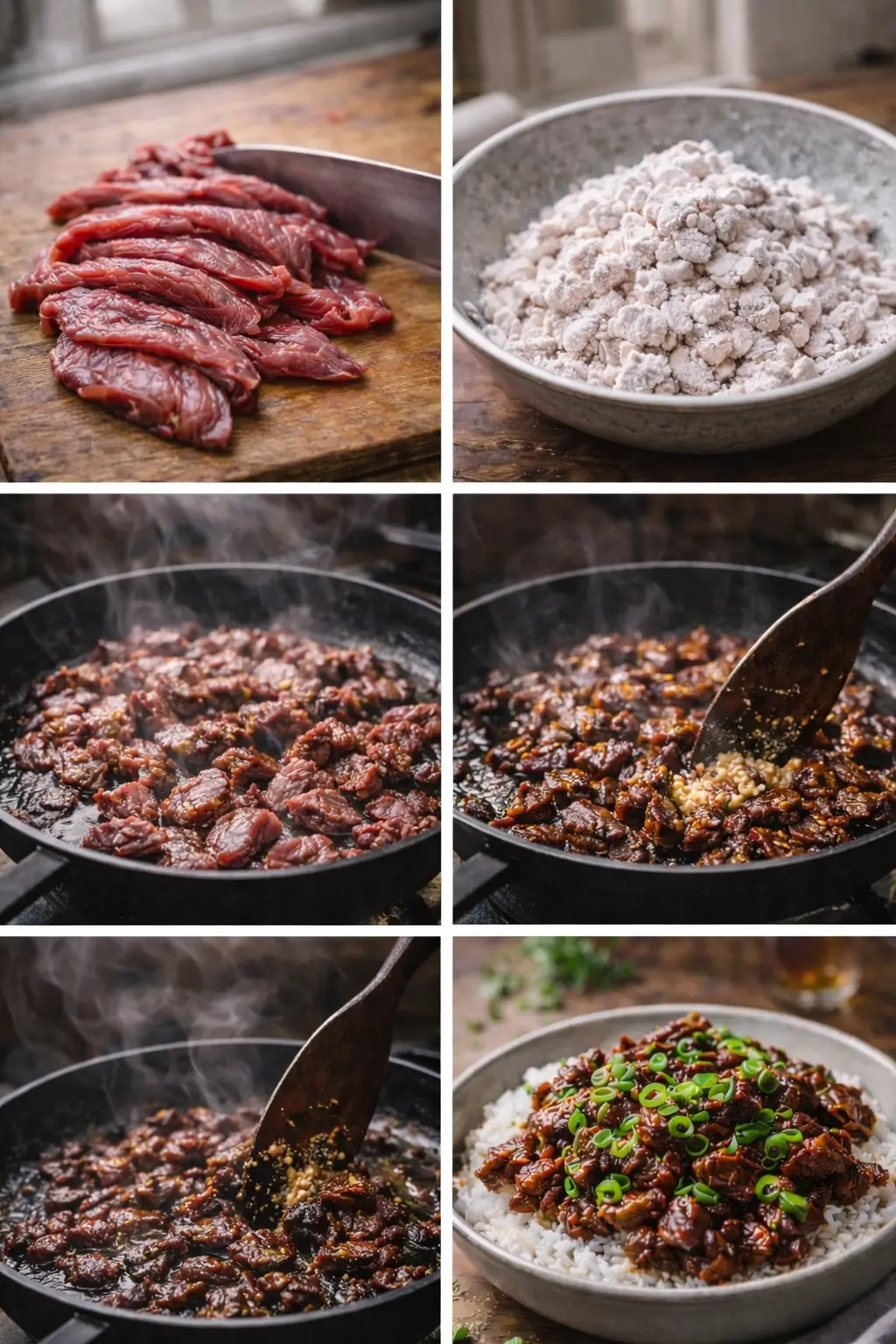
Step 1: Slice and Coat the Beef
Begin by slicing the flank steak against the grain into strips approximately 1/4 inch thick. Cutting against the grain is essential — it shortens the muscle fibers and is the primary reason some Mongolian beef is melt-in-your-mouth tender while others feel chewy and tough. Once sliced, place the strips in a large bowl and add the cornstarch, black pepper, and salt. Toss until every piece is evenly and thoroughly coated. The cornstarch should look like a thin, dry layer on each strip with no wet patches. Set aside while you prepare the sauce.
Step 2: Mix the Mongolian Sauce
In a small bowl or measuring cup, whisk together the soy sauce, brown sugar, water, and hoisin sauce until the sugar is fully dissolved. Taste the sauce at this stage — it should be intensely savory, noticeably sweet, and rich. It will seem very strong at this point, but it will mellow and round out once it coats the beef and reduces slightly in the hot pan. Set it aside. Do not add the sesame oil yet — it goes in at the very end, off the heat, to preserve its delicate aroma.
Step 3: Flash-Fry the Beef
Heat the vegetable oil in a large wok or heavy skillet over high heat until it is shimmering and nearly smoking. Add the cornstarch-coated beef strips in a single layer — work in two batches to avoid overcrowding. Fry for approximately 1 minute per side without stirring. You are not cooking the beef through at this stage; you are creating a light, set exterior that will hold the sauce and provide textural contrast against the tender interior. The cornstarch coating will turn lightly golden and slightly crisp. Remove the beef with a slotted spoon and transfer to a plate. Pour off the excess oil, leaving roughly 1 tablespoon in the pan.
Step 4: Cook the Aromatics
Return the pan to high heat with the remaining tablespoon of oil. Add the garlic, ginger, and the white parts of the green onions. Stir-fry for 30 to 45 seconds, moving constantly. This step is fast and requires your full attention — garlic and ginger at high heat go from perfectly golden to burnt in seconds. The moment you smell that sharp, fragrant aroma bloom in the pan, you are ready for the next step. Do not walk away from the pan during this stage.
Step 5: Build the Sauce and Combine
Pour the prepared sauce mixture directly into the hot pan with the aromatics. It will bubble immediately and aggressively — this is correct. Stir to combine and allow the sauce to cook for 1 to 2 minutes until it thickens slightly and darkens in color. You will notice it begin to look glossy and coat the back of a spoon. At this point, return the flash-fried beef to the pan. Toss everything together rapidly over high heat for 1 to 2 minutes until every piece of beef is thoroughly coated in the glossy, caramelized sauce. Remove from heat and stir in the sesame oil.
Step 6: Garnish and Serve Immediately
Transfer the Mongolian beef to a serving plate or directly over steamed rice in individual bowls. Scatter the sliced green parts of the green onions over the top along with a pinch of sesame seeds if desired. Serve immediately — this dish is at its absolute best the moment it comes off the heat, when the sauce is still glossy, the beef is still tender, and the aroma is at its peak.
Nutritional Information (Per Serving)
Here is the approximate nutritional breakdown per serving, based on the recipe as written and served without rice:
| Nutrient | Amount |
| Calories | ~420 kcal |
| Protein | 36g |
| Total Fat | 18g |
| Saturated Fat | 4g |
| Carbohydrates | 28g |
| Dietary Fiber | 1g |
| Sugars | 16g |
| Sodium | ~820mg |
| Iron | 18% DV |
| Zinc | 40% DV |
| Vitamin B12 | 70% DV |
| Niacin (B3) | 45% DV |
Note: Nutritional values are estimates based on standard ingredient quantities and will vary depending on specific brands, exact portion sizes, and how much oil is absorbed during the flash-frying step. Adding 1 cup of cooked white rice per serving adds approximately 200 calories and 44 grams of carbohydrates.
The sugar content in this recipe reflects the brown sugar in the sauce, which is what gives Mongolian beef its characteristic sweetness and caramelized glaze. Using coconut sugar or reducing the sugar quantity by 25% are both effective ways to lower this number without dramatically altering the flavor profile.
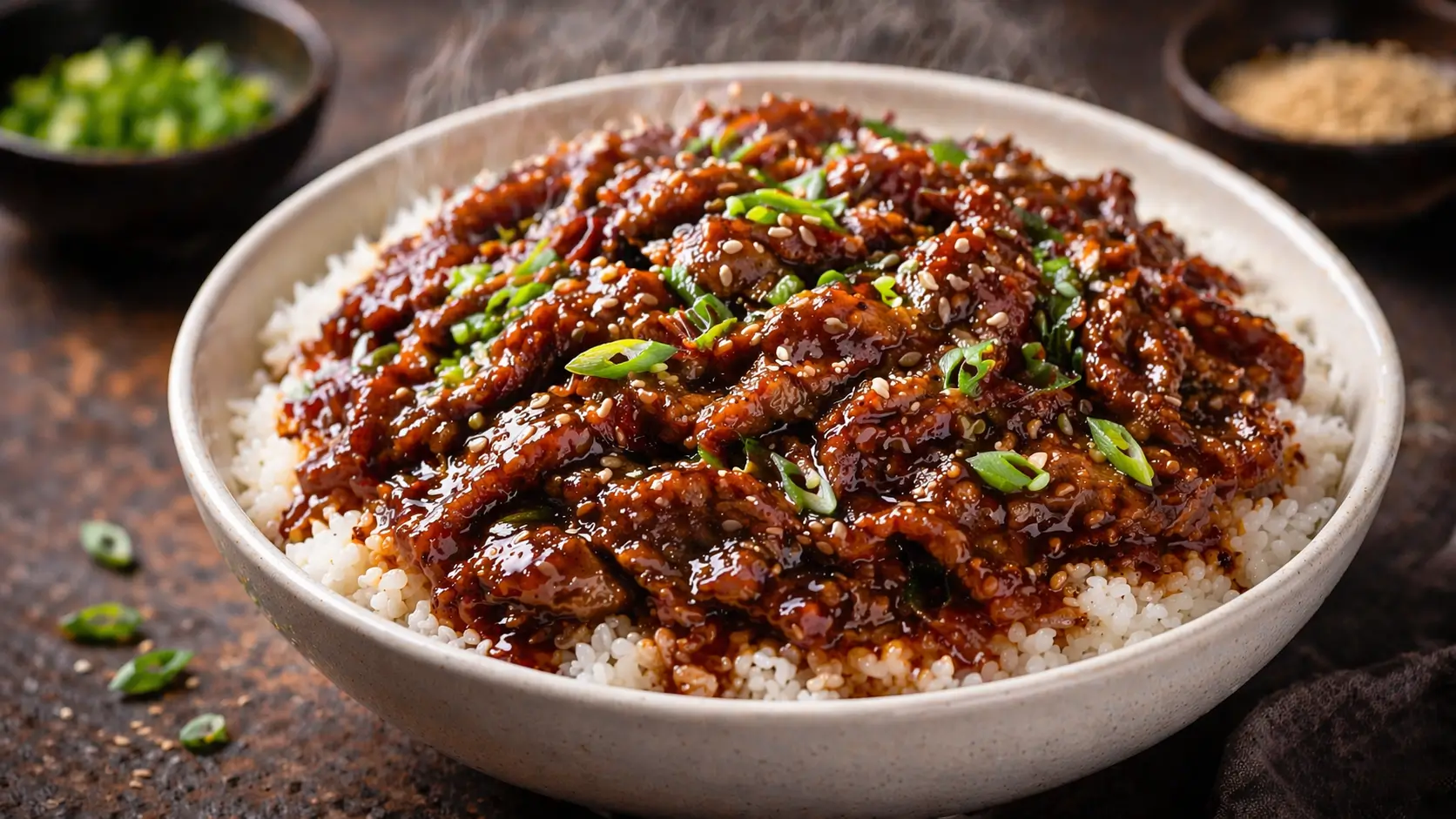
Healthier Alternatives for the Mongolian Beef Recipe
This recipe is already relatively efficient in terms of active cooking fat, but there are meaningful adjustments you can make to align it with a range of nutritional goals:
- Reduce the brown sugar by up to half — the sauce will be less sweet and slightly less thick, but still deeply savory and satisfying. A tablespoon of honey can replace part of the sugar for a more complex, natural sweetness with a lower glycemic impact.
- Use coconut aminos instead of soy sauce — naturally gluten-free and approximately 60% lower in sodium than standard soy sauce. The flavor is slightly milder and sweeter, which works well in this sauce.
- Skip the flash-frying and use a dry sear instead — heat a lightly oiled pan to high heat and sear the cornstarch-coated beef in batches without the additional oil. The exterior will not be quite as textured, but the result is still excellent and significantly lower in fat.
- Substitute flank steak with extra-firm tofu or portobello mushroom strips — press the tofu thoroughly, coat in cornstarch, and follow the same cooking method for a satisfying vegetarian or vegan adaptation that holds the sauce beautifully.
- Add vegetables to increase fiber and micronutrient density — broccoli florets, snap peas, julienned carrots, baby bok choy, or thinly sliced bell peppers all work well. Add them to the pan after the aromatics and stir-fry for 2 to 3 minutes before adding the sauce.
- Serve over cauliflower rice or shirataki noodles instead of white rice — reduces carbohydrates significantly while maintaining the overall structure and satisfaction of the meal.
- Use arrowroot powder instead of cornstarch — a grain-free alternative that produces a similar glossy, thickening effect in the sauce and a comparable coating texture on the beef.
Serving Suggestions That Elevate the Dish
Mongolian beef is versatile enough to work across a range of presentations, from a simple weeknight plate to an impressive dinner party spread:
- Classic Steamed White Rice — The traditional and most satisfying pairing. Jasmine rice is particularly good here; its slight floral note complements the savory-sweet sauce without competing with it.
- Garlic Noodles or Lo Mein — Toss cooked egg noodles directly into the pan with the finished Mongolian beef and sauce for a complete one-pan noodle dish that is even more filling than the rice version.
- Mongolian Beef Rice Bowl — Build individual bowls with steamed rice, a generous portion of Mongolian beef, sliced cucumber, shredded carrots, and a drizzle of chili oil. Top with a soft-boiled egg for a restaurant-worthy presentation.
- Lettuce Wrap Style — Spoon the beef into large butter lettuce or iceberg cups for a lighter, lower-carb presentation that works well as both a starter and a main course.
- Meal Prep Bowls — Divide into four containers with rice and steamed broccoli for a week of ready-to-go lunches. The sauce actually deepens in flavor after a day in the refrigerator, making leftovers arguably better than the original.
- Side Dish Pairing — Serve alongside hot and sour soup, a simple cucumber salad dressed with rice vinegar and sesame oil, or steamed dumplings for a complete Asian-inspired spread.
For a finishing garnish that adds both visual appeal and flavor, thinly slice a fresh red chili and scatter it over the top alongside the green onions. A light drizzle of additional sesame oil over the finished dish just before serving reinforces that toasty, aromatic note that makes Mongolian beef so distinctive.
Common Mistakes to Avoid
Mongolian beef is fast and forgiving, but a handful of consistent errors prevent home cooks from reaching their full potential with this dish:
1. Slicing the beef with the grain: This is the most frequent reason Mongolian beef turns out chewy. Always identify the direction of the muscle fibers and cut perpendicular to them. The difference in tenderness is immediate and significant.
2. Not coating the beef evenly in cornstarch: Patches of uncoated beef will not hold the sauce as effectively and will not develop the same exterior texture. Every surface of every strip should have a thin, even coating of cornstarch before it hits the oil.
3. Flash-frying at insufficient heat: The oil must be genuinely hot before the beef goes in. If the oil is not hot enough, the beef steams in the pan and the cornstarch coating becomes gummy rather than setting into that lightly textured exterior.
4. Overcrowding during flash-frying: Adding all the beef at once drops the oil temperature sharply. Cook in two batches to maintain heat and ensure each piece of beef gets proper contact with the hot oil.
5. Burning the garlic and ginger: At high heat, minced garlic and ginger cook in under a minute. Burnt aromatics produce a bitter, acrid flavor that carries through the entire sauce and cannot be corrected. Watch the pan closely and add the sauce the moment the aromatics are golden and fragrant.
6. Adding sesame oil too early: Sesame oil has a low smoke point and its complex, delicate aroma dissipates almost instantly under high heat. Always add it off the heat at the very end of cooking to preserve its flavor.
7. Using high-sodium soy sauce without adjusting: Standard soy sauce can make the finished dish unpleasantly salty, particularly when the sauce reduces. Always use low-sodium soy sauce in this recipe, or reduce the quantity of standard soy sauce by 20 to 25%.
Storing Tips for Your Mongolian Beef
Mongolian beef stores and reheats remarkably well, making it one of the best dishes in this style of cooking for meal prep and planned leftovers.
Refrigerating
Allow the Mongolian beef to cool to room temperature before transferring to an airtight container. Refrigerate for up to 4 days. The sauce thickens considerably as it chills, which is normal. When reheating, add 2 to 3 tablespoons of water or beef broth to the container before microwaving or to the pan before stovetop reheating. Stir to loosen the sauce as it heats. Stovetop reheating over medium heat produces a better texture than microwaving, though both are acceptable.
Freezing
Mongolian beef freezes well for up to 3 months. Allow it to cool completely, then transfer to a freezer-safe container or zip-lock bag with the air pressed out. Label with the date. Thaw overnight in the refrigerator and reheat on the stovetop with a splash of water to loosen the sauce. Note that the beef may be slightly softer in texture after freezing, but the flavor holds up extremely well.
Make-Ahead Tips
The Mongolian sauce can be mixed and refrigerated in a jar for up to 5 days in advance. The beef can be sliced, coated in cornstarch, and refrigerated on a plate covered with plastic wrap for up to 24 hours before cooking. With both components prepped, the actual cooking time from start to finish is under 15 minutes — making this an ideal recipe for busy weeknights when preparation time in the morning pays dividends at dinner.
Storing Cooked Rice Separately
If meal prepping full bowls, always store the rice and the Mongolian beef in separate containers. Rice absorbs the sauce as it sits, which dilutes the flavor and changes the texture of both components. Reheat them separately and combine just before eating for the best result.
Final Thoughts: Your New Favorite Weeknight Mongolian Beef Recipe
This Mongolian beef recipe delivers bold, glossy, restaurant-quality flavor in under 30 minutes using simple pantry ingredients. Tender beef, a rich savory-sweet sauce, and aromatic garlic and ginger make it a dish that consistently outperforms takeout. Make it once and it becomes a weekly staple.
We would love to hear how your Mongolian beef turned out. Leave a rating and a comment in the review section below, share this recipe with someone who loves a great stir-fry, and subscribe to our newsletter for new recipes, cooking tips, and kitchen inspiration delivered to your inbox every week.
>>> Subscribe for New Recipes Every Week!
Frequently Asked Questions (FAQs)
Q: Is Mongolian beef actually from Mongolia? Despite its name, Mongolian beef is an American-Chinese dish with no direct culinary roots in Mongolian cuisine. It was developed in American-Chinese restaurants, likely inspired by the Mongolian barbecue cooking style popularized in Taiwan in the 1950s. The dish as most people know it — thinly sliced beef in a sweet soy-based sauce — is firmly a creation of the American-Chinese restaurant tradition.
Q: What is the best cut of beef for Mongolian beef? Flank steak is the preferred choice because its long, visible muscle fibers make it easy to identify the grain direction for slicing, and its moderate fat content keeps it juicy and flavorful under high-heat stir-fry conditions. Sirloin and skirt steak are excellent alternatives. Avoid very lean cuts like eye of round, which tend to dry out quickly, and very fatty cuts like ribeye, which do not stir-fry as cleanly.
Q: Can I make this recipe gluten-free? Yes, with two simple swaps. Replace the soy sauce with coconut aminos or certified gluten-free tamari, and verify that your hoisin sauce is gluten-free — several brands now offer gluten-free versions. Cornstarch is naturally gluten-free. All other ingredients in this recipe are gluten-free by default.
Q: Why does my Mongolian beef sauce not thicken properly? There are two common causes. First, the pan may not be hot enough when the sauce is added — the sauce needs high heat to reduce and thicken quickly. Second, if the sauce was measured inaccurately or extra water was added, it may need a longer reduction time. If the sauce is still thin after 2 to 3 minutes of cooking, mix a teaspoon of cornstarch with a tablespoon of cold water and stir it into the pan. The sauce will thicken within 30 seconds.
Q: Can I add vegetables to this Mongolian beef recipe? Absolutely, and it is a great way to add nutritional value and extend the recipe further. Broccoli florets, snap peas, julienned bell peppers, baby bok choy, and thinly sliced carrots all work well. Add them to the pan after the aromatics, stir-fry for 2 to 3 minutes until just tender, and then proceed with adding the sauce and beef. Avoid watery vegetables like zucchini or cucumber, which release too much liquid and dilute the sauce.
Q: How do I make the beef extra tender? In addition to slicing against the grain, you can velvet the beef — a technique used in Chinese restaurant cooking. To velvet, mix the sliced beef with 1 teaspoon of baking soda and 2 tablespoons of water, let it sit for 15 minutes, then rinse thoroughly before coating in cornstarch. The baking soda raises the pH of the beef surface, which breaks down proteins and produces a noticeably silkier, more tender texture.
Q: How spicy is this recipe? As written, this Mongolian beef recipe is mildly spiced — the 1/2 teaspoon of red pepper flakes adds a gentle warmth in the background that most people will not find spicy at all. For a spicier version, increase the red pepper flakes to 1 full teaspoon, add a teaspoon of chili garlic paste to the sauce, or finish the dish with a drizzle of chili oil. For a completely mild version suitable for children, omit the red pepper flakes entirely.
More Easy Beef Recipes to Try: