
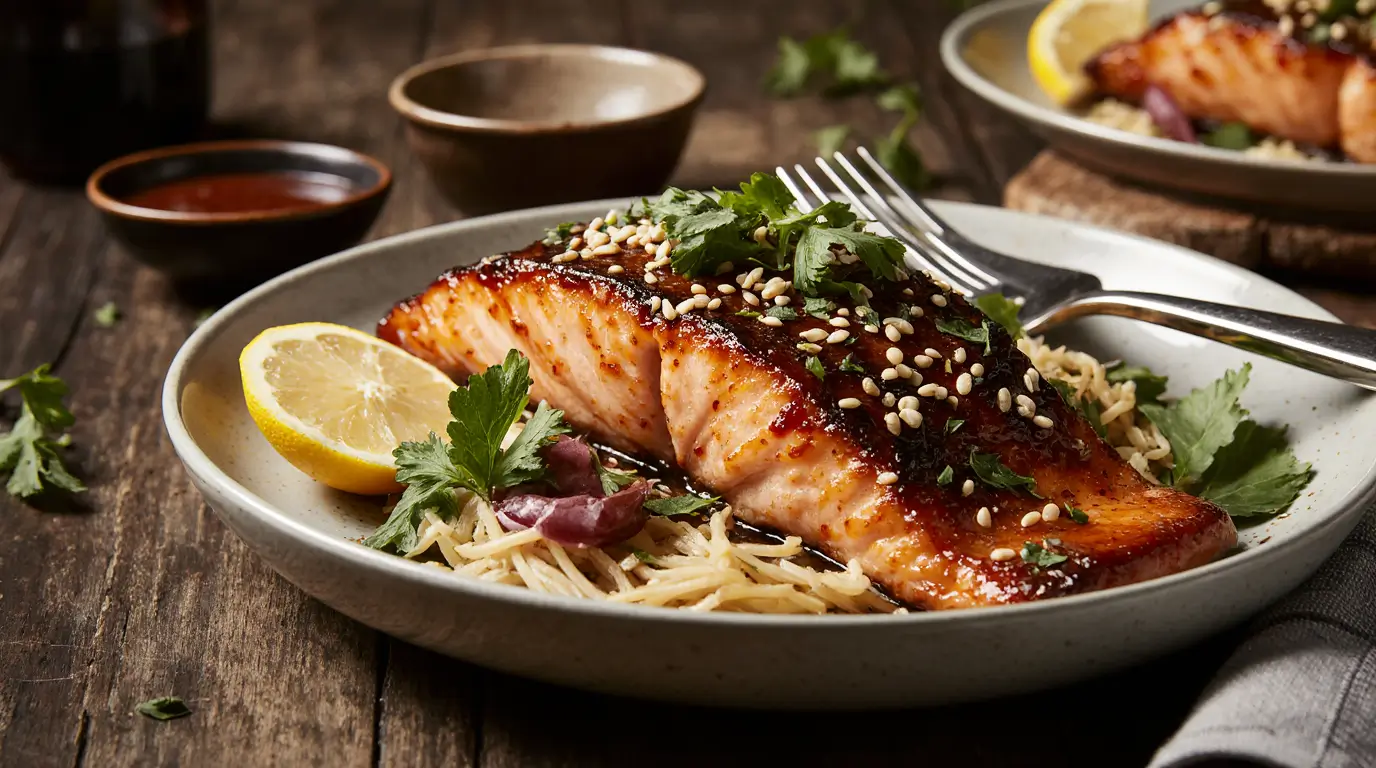
Easy Baked Teriyaki Salmon Guide
A Step-by-Step Recipe for a Healthy, Flavorful Weeknight Dinner
Table of Contents
Why Baked Teriyaki Salmon Should Be Your Next Weeknight Go-To
Did you know that nearly 70% of home cooks say they struggle to find dinner recipes that are both genuinely healthy AND packed with flavor — without requiring a culinary degree? If that sounds familiar, this baked teriyaki salmon recipe is about to change your weeknight routine forever.
Baked teriyaki salmon combines the rich, buttery texture of oven-roasted salmon with a glossy, sweet-savory Japanese-inspired glaze that caramelizes beautifully in the oven. The result? A restaurant-quality dish you can realistically pull off on a Tuesday night in under 35 minutes.
Salmon is one of the most nutrient-dense proteins on the planet — loaded with omega-3 fatty acids, vitamin D, and high-quality protein. Pair that with a homemade teriyaki sauce (far lower in sodium than store-bought versions), and you have a meal that satisfies your taste buds, supports heart health, and fits almost any dietary goal.
Whether you are a seasoned home chef or someone who just started cooking, this guide walks you through every detail: ingredients, substitutions, step-by-step instructions, pro tips, nutritional data, serving ideas, and storage advice. Let’s get cooking.
Ingredients for Baked Teriyaki Salmon
Everything you need is likely already in your pantry or easily found at your local grocery store. Here is what makes this recipe sing:
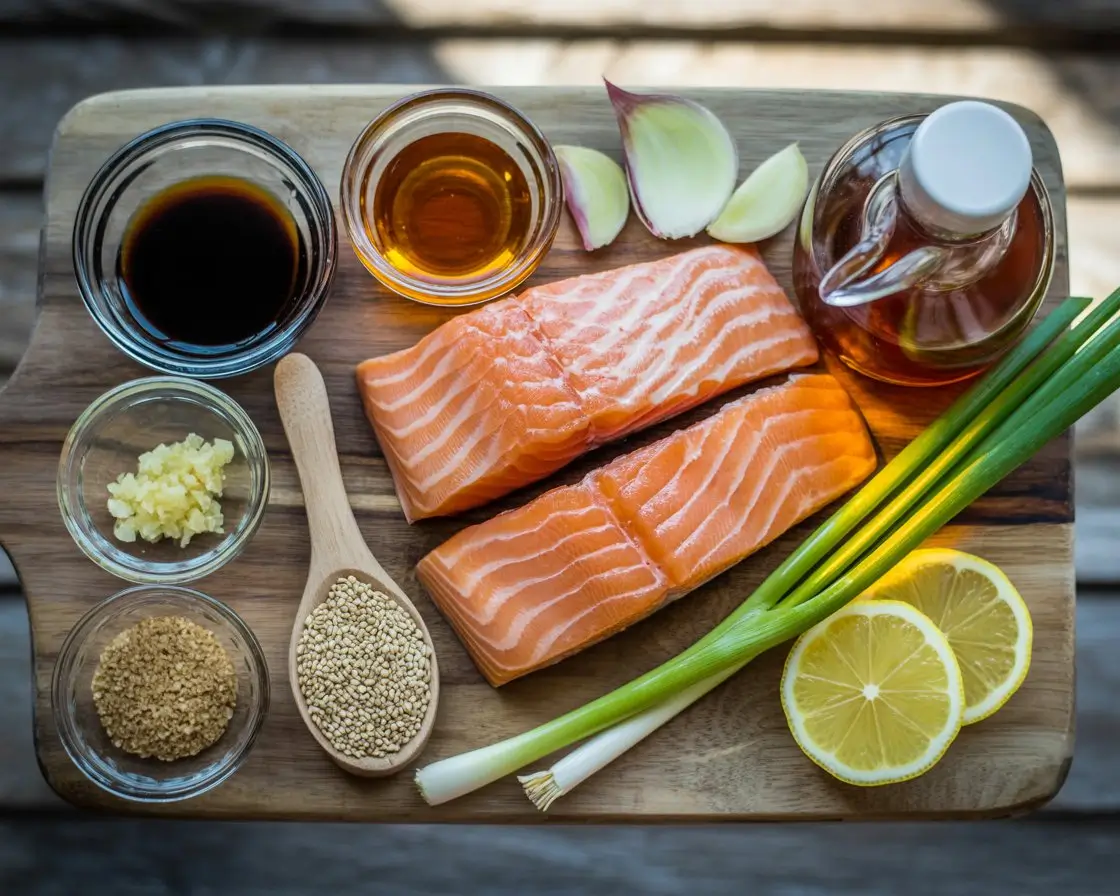
🐟 For the Salmon:
- 4 salmon fillets (6 oz each) — skin-on for best moisture retention
- 1 tablespoon olive oil (or avocado oil)
- Salt and freshly cracked black pepper, to taste
- 1 teaspoon sesame seeds (for garnish)
- 2 green onions, thinly sliced (for garnish)
🍯 For the Homemade Teriyaki Sauce:
- ¼ cup low-sodium soy sauce (or tamari for gluten-free)
- 2 tablespoons honey (or pure maple syrup for vegan-friendly)
- 1 tablespoon rice vinegar
- 1 tablespoon fresh grated ginger
- 2 garlic cloves, minced
- 1 teaspoon sesame oil
- 1 teaspoon cornstarch + 1 tablespoon water (to thicken the glaze)
Smart Substitution Ideas:
- No salmon? Try steelhead trout — virtually identical texture and flavor profile
- Coconut aminos replace soy sauce for a lower-sodium, soy-free option
- Brown sugar or agave nectar work in place of honey
- Arrowroot powder can substitute for cornstarch (same ratio)
Timing: Fast Enough for Weeknights, Special Enough for Guests
- Prep Time: 10 minutes
- Marinating Time (optional): 15–30 minutes for deeper flavor
- Cook Time: 12–15 minutes
- Total Time: 25–35 minutes (or ~50 minutes if marinating)
That is roughly 40% faster than the average baked salmon recipe, which typically clocks in around 50–60 minutes including prep. With this streamlined method, you can have a stunning, nutritious dinner on the table before a standard pasta dish would even be halfway done.
💡 Pro Tip: Prep the teriyaki sauce the night before and store it in a jar in the fridge. Dinner becomes a 20-minute affair the next day.
Step-by-Step Instructions
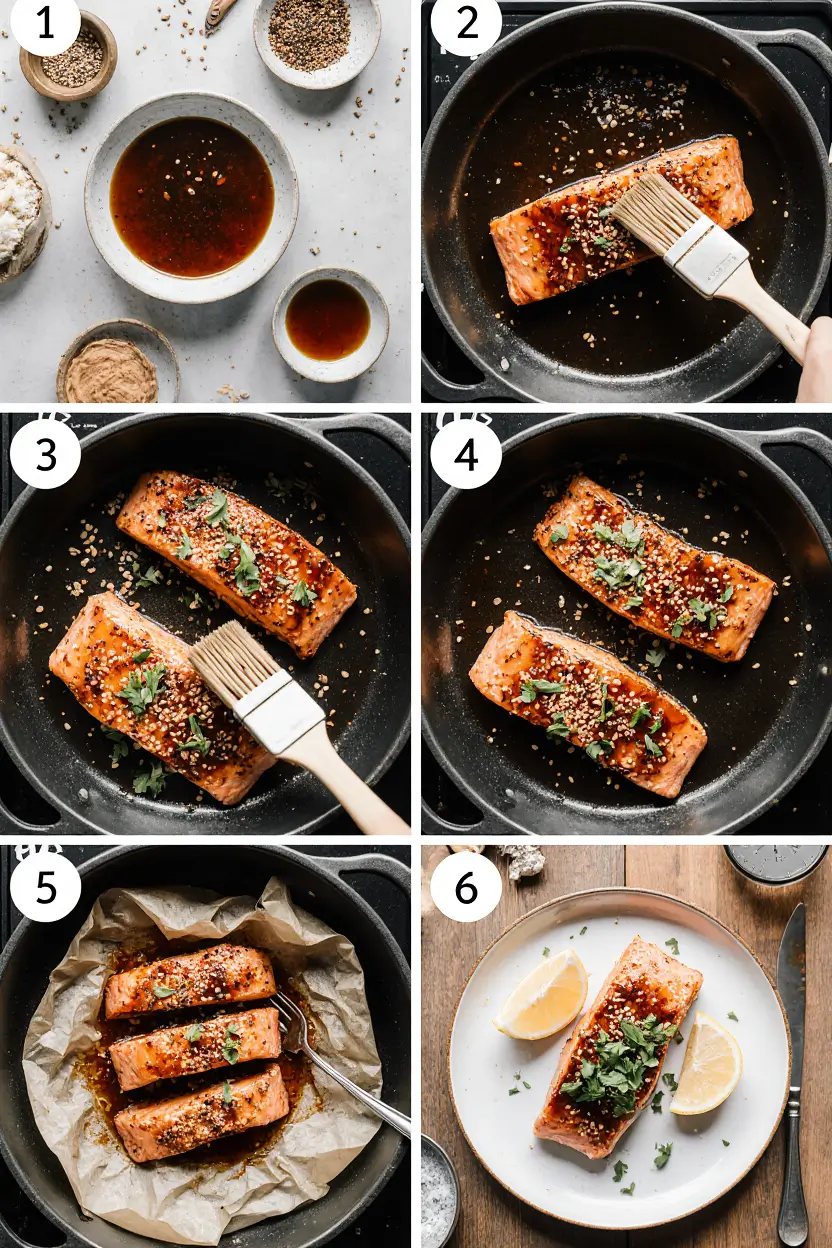
Step 1: Preheat Your Oven and Prep Your Baking Dish
Set your oven to 400°F (200°C) — the ideal temperature for baked salmon fillets to cook through without drying out. Line a rimmed baking sheet or oven-safe dish with parchment paper or aluminum foil for easy cleanup. Lightly brush the surface with olive oil.
💡 Pro Tip: A dark baking sheet absorbs heat more efficiently and helps caramelize the teriyaki glaze for that gorgeous, lacquered finish.
Step 2: Make the Teriyaki Glaze from Scratch
In a small saucepan over medium heat, combine the soy sauce, honey, rice vinegar, grated ginger, minced garlic, and sesame oil. Stir until the honey dissolves fully, about 2 minutes. In a tiny bowl, whisk together the cornstarch and water to create a slurry, then pour it into the saucepan while stirring continuously. Cook for another 1–2 minutes until the sauce thickens to a syrupy, glossy consistency. Remove from heat and let it cool slightly.
The aroma alone at this stage is reason enough to make this recipe. The ginger and garlic bloom beautifully in the warm sauce, creating a deeply fragrant umami base.
💡 Pro Tip: Taste your glaze before applying it. Need more sweetness? Add a teaspoon of honey. Want more depth? A small splash of fish sauce elevates the umami dramatically.
Step 3: Season and Arrange the Salmon Fillets
Pat your salmon fillets completely dry with paper towels — this is non-negotiable for good caramelization. Moisture on the surface creates steam, which inhibits browning. Place the fillets skin-side down on your prepared baking sheet. Season lightly with salt and black pepper, then brush generously with about half of your teriyaki glaze.
If you have time to marinate, place the glazed fillets in a zip-lock bag or covered dish and refrigerate for 15–30 minutes. The salmon absorbs the ginger-forward marinade and develops incredible flavor depth — especially worth it for weekend cooking.
Step 4: Bake the Salmon to Perfection
Slide the baking sheet into your preheated oven and bake for 12–15 minutes, depending on the thickness of your fillets. A standard 6-oz, 1-inch-thick fillet takes about 13 minutes. The salmon is done when it flakes easily with a fork at the thickest part and has reached an internal temperature of 125–130°F (52–54°C) for medium, or 145°F (63°C) for fully cooked.
At the 10-minute mark, brush the remaining teriyaki glaze over the top of each fillet. This double-glaze technique creates that irresistibly sticky, caramelized crust that makes baked teriyaki salmon so visually stunning.
💡 Pro Tip: Use a digital instant-read thermometer for foolproof results. Overcooked salmon is dry salmon — pull it out right when it hits your target temp.
Step 5: Rest, Garnish, and Serve
Allow the salmon to rest for 2–3 minutes before serving — this redistributes the juices and keeps the flesh moist and tender. Sprinkle generously with toasted sesame seeds and sliced green onions. A wedge of fresh lemon on the side cuts through the richness of the glaze beautifully and brightens the entire dish.
Stand back and admire your work. That glossy, amber-lacquered salmon with its fragrant teriyaki glaze is nothing short of spectacular — and you made it in under 35 minutes.
Nutritional Information (Per Serving)
One of the most compelling reasons to make baked teriyaki salmon a regular in your meal rotation is its exceptional nutritional profile. Here is a full breakdown based on a 6-oz salmon fillet with teriyaki glaze:
| Nutrient | Per Serving (6 oz) |
| Calories | 320 kcal |
| Protein | 42g |
| Total Fat | 11g (Healthy Omega-3s) |
| Saturated Fat | 2.1g |
| Carbohydrates | 14g |
| Sugar | 10g |
| Sodium | 680mg |
| Omega-3 Fatty Acids | 2.2g |
| Vitamin D | 18mcg (90% DV) |
| Vitamin B12 | 4.9mcg (204% DV) |
| Selenium | 50mcg (91% DV) |
Salmon is one of only a handful of foods that naturally provide significant vitamin D — a nutrient that over 40% of Americans are deficient in, according to nutritional research. The omega-3 fatty acids (EPA and DHA) in salmon are clinically linked to reduced cardiovascular risk, improved brain function, and reduced inflammation.
Compared to chicken breast (around 165 calories, 31g protein), salmon offers more healthy fats, dramatically more omega-3s, and a broader micronutrient spectrum — making it a superior choice for overall health optimization.
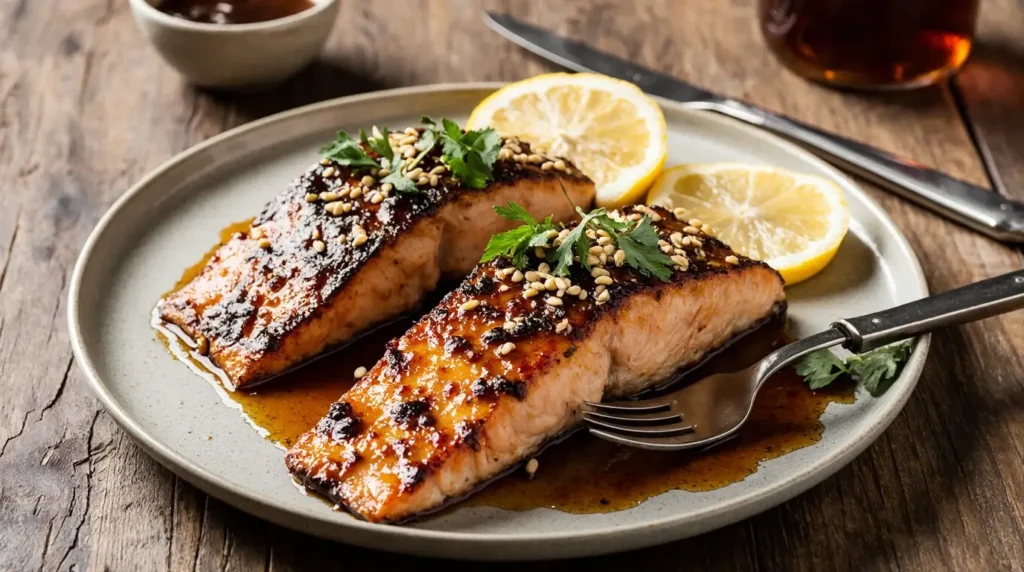
Healthier Alternatives for the Recipe
This recipe is already a nutritional powerhouse, but here are smart swaps to tailor it for specific dietary needs:
Lower Sugar:
- Replace honey with monk fruit sweetener or erythritol (1:1 ratio) to eliminate added sugar completely
- Reduce honey by half and add a dash of apple juice for natural sweetness
Lower Sodium:
- Use coconut aminos instead of soy sauce — it contains roughly 65% less sodium
- Use low-sodium tamari and skip any additional salt on the fillets
Gluten-Free:
- Swap regular soy sauce for certified gluten-free tamari or coconut aminos
- Use arrowroot powder instead of cornstarch (both are naturally gluten-free)
Keto/Low-Carb:
- Use a sugar-free teriyaki sauce base with monk fruit sweetener
- Replace cornstarch with xanthan gum (use only ¼ teaspoon — it is far more potent)
Dairy-Free & Paleo:
- This recipe is already dairy-free as written
- For strict Paleo, use coconut aminos and honey, and skip the cornstarch thickener entirely — simmer the sauce longer to reduce naturally
Serving Suggestions
Baked teriyaki salmon is incredibly versatile. Here are delicious, restaurant-inspired ways to plate and serve it:
- Classic Japanese Bowl: Serve over a bed of steamed white or brown rice with edamame, pickled cucumber slices, and a drizzle of extra glaze. This is the most popular presentation.
- Low-Carb Option: Swap the rice for cauliflower rice or zucchini noodles tossed lightly in sesame oil and garlic.
- Bright and Fresh: Pair with a crisp Asian slaw — shredded cabbage, carrots, cilantro, and a rice vinegar dressing — for a refreshing textural contrast to the sticky glaze.
- Weeknight Grain Bowl: Layer over quinoa with steamed broccoli, shredded carrots, avocado slices, and a sprinkle of furikake seasoning.
- Elegant Dinner Party: Plate on a long rectangular platter with roasted bok choy, garnish with microgreens, and finish with a zigzag of teriyaki reduction. It looks stunning.
- Teriyaki Salmon Tacos: Flake the baked salmon over small corn tortillas with avocado crema, pickled red onion, and shredded purple cabbage. A total crowd-pleaser.
A squeeze of yuzu juice (Japanese citrus) or lime is a chef’s secret for brightening the umami glaze and making every flavor pop on the palate.
Common Mistakes to Avoid
Even simple recipes have pitfalls. Here are the most frequent errors home cooks make with baked teriyaki salmon — and exactly how to avoid them:
- Not Drying the Salmon Before Baking. Surface moisture prevents caramelization and leads to a steamed, pale fillet instead of a lacquered one. Always pat dry thoroughly with paper towels before applying the glaze.
- Overcooking the Salmon. According to culinary surveys, overcooked fish is the #1 complaint about home-cooked seafood. Pull salmon at 125–130°F for moist, tender results. It will continue cooking slightly from residual heat after removal.
- Using Pre-Made Teriyaki Sauce. Most commercial teriyaki sauces contain 600–900mg sodium per tablespoon, corn syrup, and artificial additives. Homemade takes only 5 minutes and is significantly healthier and more flavorful.
- Skipping the Double Glaze. Applying glaze only before baking misses the beautiful caramelized lacquer effect. Always add a second coat in the final 3–4 minutes of cooking for that glossy, restaurant-quality finish.
- Baking at Too Low a Temperature. Salmon baked below 375°F tends to steam rather than roast. Keep the oven at 400°F for proper caramelization and a slightly crispy exterior.
- Using Very Thin Fillets Without Adjusting Time. Thin tail-end cuts (under ½ inch) can overcook in as little as 8 minutes at 400°F. Check early and use a thermometer.
Storing Tips for the Recipe
Refrigerating Leftovers:
Allow baked teriyaki salmon to cool to room temperature (no more than 2 hours at room temp), then transfer to an airtight container. Stored properly, it keeps well in the refrigerator for up to 3 days.
Reheating Without Drying Out:
The best way to reheat salmon is gently in the oven at 275°F for 10–12 minutes, loosely covered with foil. Avoid the microwave if possible — it uneven-heats and tends to make fish rubbery. If you must microwave, do it at 50% power in 30-second intervals.
Freezing:
Cooked salmon can be frozen for up to 2 months in a freezer-safe, airtight container. Thaw overnight in the refrigerator rather than at room temperature for best food safety and texture.
Make-Ahead Strategy:
Prepare the teriyaki glaze up to 5 days in advance and store in a sealed jar in the fridge. You can also marinate the raw salmon fillets (covered) for up to 24 hours before baking for incredibly deep, developed flavor. This is a fantastic meal prep strategy for busy weeks.
Conclusion
Baked teriyaki salmon is the rare recipe that hits all the marks: fast, healthy, and genuinely delicious. With a glossy homemade glaze, flaky salmon fillets, and bold umami flavor, this dish is destined to become a regular in your kitchen. Give it a try tonight — you will not be disappointed.
📝 We’d love to hear from you! Tried this recipe? Leave a star review below or drop a comment on the blog sharing your experience — your feedback helps other home cooks! Subscribe to our newsletter for weekly recipe inspiration delivered straight to your inbox.
Frequently Asked Questions (FAQs)
Can I use frozen salmon for this recipe?
Absolutely — frozen salmon works beautifully. Thaw it completely in the refrigerator overnight (not at room temperature), then pat dry thoroughly before glazing and baking. Quality frozen salmon is often fresher than “fresh” fish at many grocery stores, as it is flash-frozen at sea.
What type of salmon works best for baked teriyaki salmon?
Atlantic salmon (farmed) offers consistent fat content and a mild, rich flavor that pairs perfectly with teriyaki glaze. Wild-caught sockeye salmon has a more pronounced flavor and firmer texture. King (Chinook) salmon is the richest and most luxurious. All three work beautifully — choose based on your budget and preference.
Can I make this recipe ahead of time for meal prep?
Yes! Baked teriyaki salmon is an excellent meal prep option. Bake a full batch on Sunday, portion into containers with rice and vegetables, and you have 3–4 ready-to-go lunches or dinners. The glaze actually deepens in flavor overnight, making day-two salmon arguably even better.
How do I know when the salmon is perfectly cooked?
The most reliable method is a digital instant-read thermometer. Target 125–130°F for silky, medium-cooked salmon or 145°F for fully cooked per USDA guidelines. Visually, the flesh should turn from translucent to opaque and flake easily when pressed gently with a fork. The thickest part transitions last — check there.
Is this recipe kid-friendly?
Very much so. The sweet, mild teriyaki glaze is typically very well-received by children. If you have picky eaters, you can reduce the ginger slightly for a milder flavor. Served over white rice with a side of edamame, it is a surprisingly popular family dinner.
What can I use instead of soy sauce?
Coconut aminos is the best direct substitute — it has a naturally sweeter, milder flavor and significantly less sodium than soy sauce. Use it in a 1:1 ratio. Tamari (wheat-free soy sauce) is ideal for gluten-free diets. In a pinch, Worcestershire sauce mixed with a little salt can work, though it changes the flavor profile slightly.
Can I cook this on the stovetop or grill instead of baking?
Definitely! For stovetop: heat an oven-safe skillet over medium-high heat, sear salmon skin-side up for 3 minutes, flip, brush with glaze, and finish in a 400°F oven for 5–7 minutes. For grilling: grill on medium-high heat for 4–5 minutes per side, brushing with glaze as you go. Both methods produce fantastic results with slight flavor variations.
— Happy Cooking! —