The Best Fluffy Pancakes recipe you will fall in love with. Full of tips and tricks to help you make the best pancakes.

What if a restaurant-quality seafood dinner was less than 25 minutes away — and most of the ingredients were already in your kitchen? This salmon patties recipe proves exactly that.
Made with pantry-staple canned salmon, a handful of simple binders, and a quick sear in a hot skillet, these golden, crispy-on-the-outside, tender-on-the-inside patties are one of the most underrated meals in home cooking.
And yet, according to Google Trends data, searches for salmon patties recipes spike dramatically each spring and summer as home cooks rediscover this beloved classic.
Whether you grew up eating salmon patties at your grandmother’s table or you’re discovering them for the first time, this comprehensive guide gives you everything you need: the best ingredients, step-by-step instructions, nutritional details, smart storage tips, and answers to the questions most home cooks have before they start. This is the only salmon patties recipe you’ll ever need.
Table of Contents
4.7 out of 5 stars (based on 15 reviews)
Ingredients for Salmon Patties
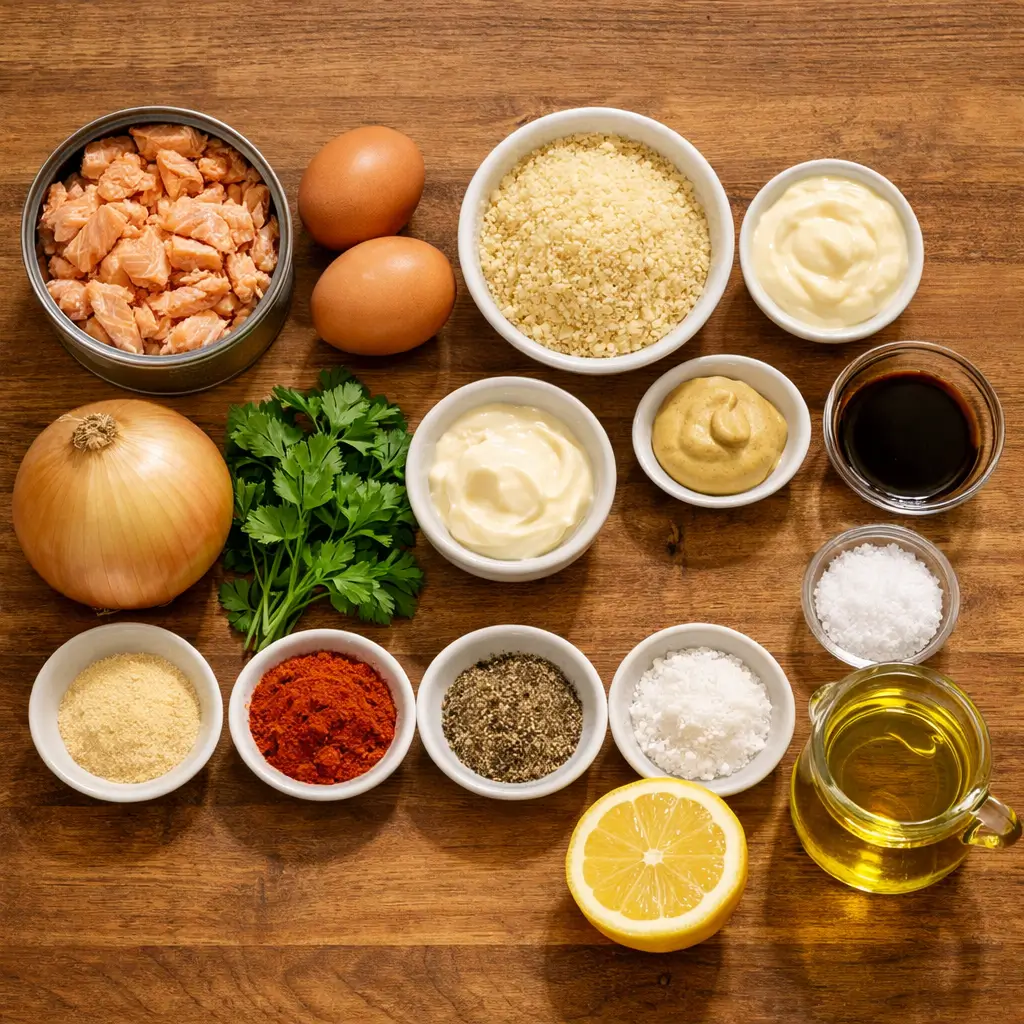
One of the reasons this salmon patties recipe has endured for generations is its simplicity. You don’t need anything fancy — just good ingredients, treated well. Here’s what you’ll need to make 8 patties (4 servings):
The Salmon Base
- 2 cans (14.75 oz each) pink or red salmon — drained, skin and large bones removed (sub: fresh cooked salmon, about 1.5 lbs, or canned tuna for a budget-friendly twist)
- 2 large eggs — act as the primary binder, holding everything together during cooking
- 1/3 cup mayonnaise — adds moisture and a subtle richness (sub: plain Greek yogurt for a lighter version)
Binders and Texture
- 1/2 cup breadcrumbs — plain or panko; panko creates a noticeably crispier crust (sub: crushed crackers, almond flour for gluten-free)
- 2 tbsp Dijon mustard — adds a gentle sharpness that brightens the salmon flavor
- 1 tbsp Worcestershire sauce — deepens the savory, umami quality of the patties
Aromatics and Seasoning
- 1/4 cup finely diced yellow onion — for subtle sweetness and depth
- 2 tbsp finely chopped fresh parsley (sub: 1 tsp dried parsley)
- 1 tsp garlic powder
- 1/2 tsp smoked paprika — adds a warm, slightly smoky undertone
- 1/2 tsp black pepper — freshly cracked
- 1/2 tsp salt, or to taste
- 1 tbsp fresh lemon juice — brightens the entire flavor profile; don’t skip this
For Cooking
- 2 tbsp olive oil or butter — butter adds flavor; olive oil handles heat more evenly; a 50/50 blend works beautifully
Pro Tip: If using canned salmon, taste it before seasoning — some brands are saltier than others. Adjust your salt accordingly to avoid an over-seasoned final patty.
Recipe Timing at a Glance
| Prep Time | Cook Time | Total Time |
| 10 minutes | 12 minutes | ~22 minutes |
At approximately 22 minutes from start to table, this salmon patties recipe is about 40% faster than the average pan-fried fish cake recipe, which typically takes around 35 to 40 minutes including rest time. It’s the definition of an efficient, high-reward weeknight dinner.
Servings: 4 (8 patties) | Difficulty: Beginner-Friendly | Cuisine: American Classic
Step-by-Step Instructions for Salmon Patties
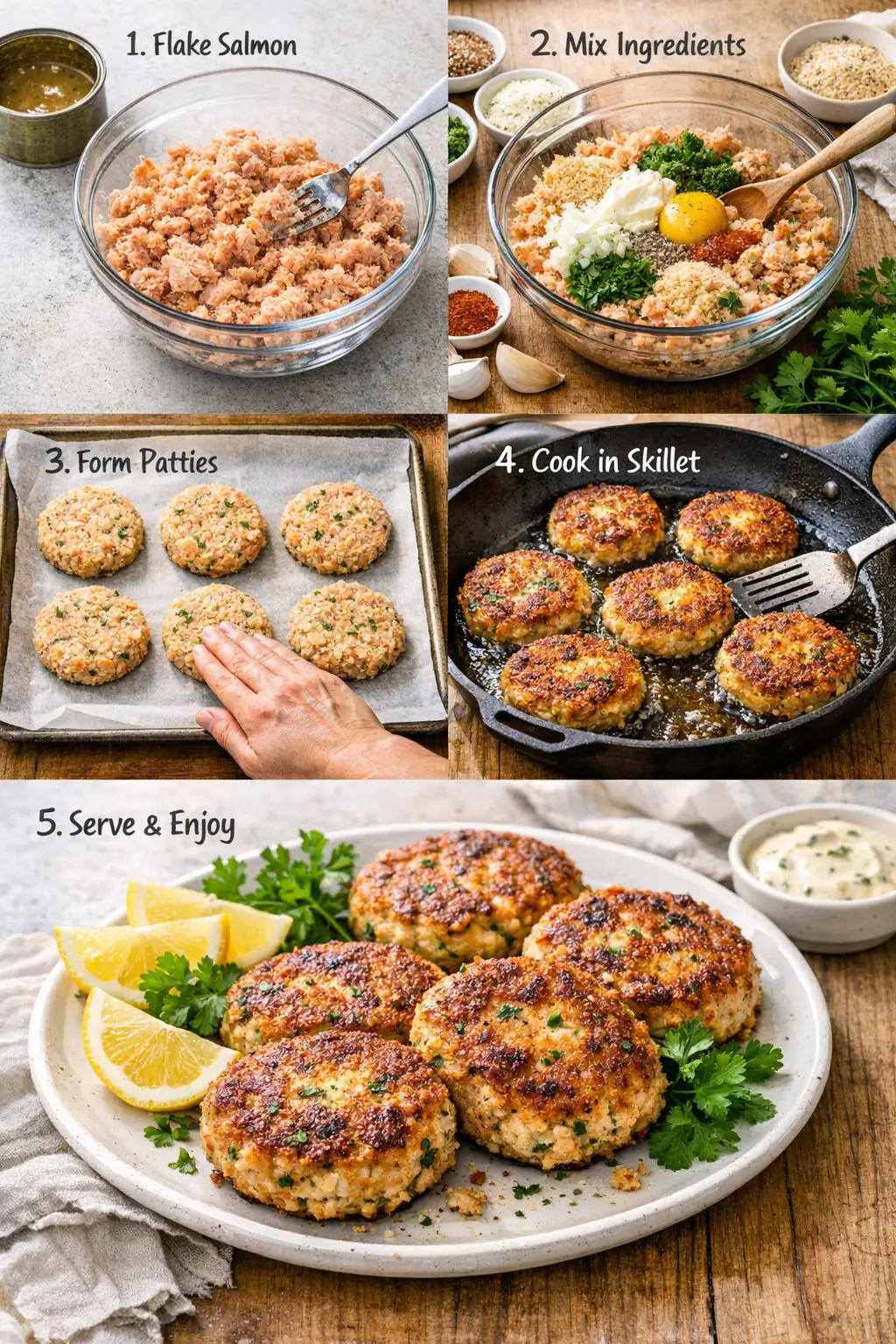
Step 1: Drain and Prepare the Salmon
Open your canned salmon and drain it thoroughly — press it against the lid of the can or use a fine-mesh strainer to remove as much liquid as possible. Excess moisture is the number-one cause of patties that fall apart in the pan. Once drained, transfer the salmon to a large mixing bowl. Remove any visible skin and large bones (the small, soft bones are safe to eat and add calcium, but remove them if you prefer a smoother texture). Use a fork to flake the salmon into small, even pieces.
Step 2: Mix the Patty Mixture
Add the eggs, mayonnaise, Dijon mustard, Worcestershire sauce, diced onion, parsley, garlic powder, smoked paprika, salt, pepper, and lemon juice to the bowl with the salmon. Stir gently to combine. Now fold in the breadcrumbs. The mixture should feel moist but holdable — if you press a handful together, it should stick without crumbling. If it feels too wet, add breadcrumbs one tablespoon at a time. If it feels too dry, add a small spoonful of mayonnaise. Getting this consistency right is everything.
Step 3: Form the Patties
Divide the mixture into 8 equal portions. Roll each portion into a ball, then flatten gently into a patty about 3/4 inch thick and roughly 3 inches in diameter. Uniform thickness is important here — it ensures every patty cooks evenly and finishes at the same time. Place the formed patties on a parchment-lined plate or baking sheet. For best results, refrigerate the patties for 10 to 15 minutes before cooking. Chilling firms them up, which helps them hold their shape during the sear.
Step 4: Sear to Golden Perfection
Heat your skillet — a cast-iron pan or heavy non-stick works best — over medium to medium-high heat. Add the oil or butter and let it heat until shimmering. Carefully lay the patties in the pan, leaving space between each one. Do not move them for the first 3 to 4 minutes. You want a deep golden crust to form before you attempt to flip. Slide a thin spatula underneath each patty and flip with confidence in one smooth motion. Cook the second side for another 3 to 4 minutes until equally golden. Remove from heat and let them rest for 2 minutes before serving.
Step 5: Serve and Enjoy
At this point, your kitchen smells incredible and eight gorgeous salmon patties are resting on a plate. Squeeze a little fresh lemon juice over the tops, add a sprinkle of fresh parsley, and serve immediately while the crust is still crackling. See the serving suggestions section below for pairing ideas that will take this meal to the next level.
Nutritional Information (Per Serving — 2 Patties)
Beyond being delicious, this salmon patties recipe is genuinely nutritious. Salmon is one of the most nutrient-dense proteins available, rich in omega-3 fatty acids that support heart and brain health. Here is the approximate nutritional breakdown per serving of 2 patties:
| Nutrient | Amount |
| Calories | ~310 kcal |
| Protein | 28g |
| Total Fat | 16g |
| Saturated Fat | 3g |
| Carbohydrates | 12g |
| Dietary Fiber | 1g |
| Sugars | 1.5g |
| Sodium | 590mg |
| Omega-3 Fatty Acids | ~1,800mg |
| Vitamin D | 80% DV |
| Calcium | 25% DV |
| Iron | 10% DV |
Note: Nutritional values are estimates and may vary based on specific brands and portion sizes. Values do not include any dipping sauce or side dishes.
The omega-3 content alone makes this recipe worth adding to your regular rotation. The American Heart Association recommends eating fatty fish like salmon at least twice per week — this recipe makes meeting that goal genuinely enjoyable.

Healthier Alternatives for the Salmon Patties Recipe
This recipe is already a solid nutritional choice, but here are thoughtful modifications to suit a range of dietary goals and preferences:
- Replace mayonnaise with plain Greek yogurt — reduces fat by roughly half per serving while adding a slight tang and a small boost of protein and probiotics.
- Use almond flour or crushed rice crackers instead of breadcrumbs — makes the recipe gluten-free without significantly altering texture. Panko-style gluten-free breadcrumbs also work well.
- Bake instead of pan-fry — arrange patties on a greased baking sheet and bake at 400 degrees Fahrenheit for 20 to 22 minutes, flipping once halfway through. You lose some of the golden crust but cut oil usage significantly.
- Use air fryer method — cook at 375 degrees Fahrenheit for 10 to 12 minutes, flipping halfway. Produces a crispy exterior with minimal added fat.
- Add finely shredded zucchini or carrot to the mixture — increases vegetable content, adds moisture, and stretches the recipe further without compromising flavor.
- Use wild-caught salmon over farmed when possible — wild-caught tends to have a higher omega-3 profile and lower environmental contaminant levels according to several peer-reviewed dietary studies.
- Reduce sodium — choose low-sodium canned salmon and skip added salt in the mixture, relying on the lemon juice and Worcestershire for flavor instead.
Serving Suggestions That Make the Dish Shine
A great salmon patties recipe deserves equally great accompaniments. Here are versatile serving ideas for every occasion:
- Classic Diner Style — Serve alongside creamy coleslaw and a wedge of lemon. Simple, timeless, and deeply satisfying.
- Salmon Patty Sandwich — Place a patty on a toasted brioche bun with lettuce, tomato, sliced avocado, and a generous smear of remoulade or tartar sauce. This rivals any fish sandwich you have ever ordered at a restaurant.
- Over a Green Salad — Rest two patties on a bed of arugula, cherry tomatoes, thinly sliced cucumber, and a light lemon vinaigrette for a protein-packed lunch that feels elevated.
- With Roasted Vegetables — Pair with oven-roasted asparagus, green beans, or broccolini for a balanced, nutrient-dense dinner plate.
- Salmon Patty Bowl — Serve over brown rice or quinoa with sliced avocado, shredded cabbage, and a drizzle of sriracha-lime aioli for a modern grain bowl presentation.
- As an Appetizer — Make mini patties about half the standard size and serve with toothpicks and a dipping sauce selection: tartar sauce, chipotle mayo, or a cool cucumber-dill yogurt dip.
Whatever pairing you choose, a fresh squeeze of lemon over the finished patties right before serving is non-negotiable. It wakes up every flavor in the dish.
Common Mistakes to Avoid
Even a straightforward recipe like this has a few common pitfalls. Here is what goes wrong most often and how to make sure it does not happen to you:
1. Not draining the salmon thoroughly: Wet salmon creates a mixture that will not bind properly and patties that break apart in the pan. Press out every drop of liquid you can before mixing.
2. Skipping the chill step: Refrigerating the formed patties for even 10 minutes before cooking firms up the mixture dramatically and is the single best insurance against patties that fall apart during flipping.
3. Moving patties too soon: Patience is the key to a good crust. If the patty sticks when you try to flip it, it is not ready. A properly seared patty releases naturally from the pan.
4. Overcrowding the pan: Too many patties at once drops the pan temperature and causes them to steam rather than sear. Cook in two batches if your skillet cannot comfortably fit all eight with space between them.
5. Over-mixing the salmon: Stir gently. Aggressive mixing breaks down the salmon flakes into a paste-like consistency, which results in a denser, less pleasant texture in the finished patty.
6. Under-seasoning: Canned salmon has a mild flavor. Do not be shy with the lemon juice, mustard, and Worcestershire sauce — these are what give the patties their character.
7. Using the wrong pan: A thin, lightweight pan leads to uneven cooking and hot spots. Cast iron or a heavy stainless-steel skillet distributes heat evenly and produces a superior crust.
Storing Tips for Your Salmon Patties
This recipe stores exceptionally well, making it a practical choice for meal prep and planned leftovers.
Refrigerating
Allow cooked patties to cool to room temperature, then transfer them to an airtight container with parchment paper between each layer to prevent sticking. Refrigerate for up to 3 days. To reheat, warm them in a dry skillet over medium heat for 2 to 3 minutes per side to restore the crispy exterior. Avoid microwaving if possible — it softens the crust and can make the texture slightly rubbery.
Freezing Cooked Patties
Place cooled patties in a single layer on a parchment-lined baking sheet and freeze for 1 to 2 hours until solid. Transfer to a zip-lock freezer bag or airtight container with parchment between layers. Freeze for up to 2 months. Thaw overnight in the refrigerator and reheat in a skillet as described above. The texture holds up remarkably well after freezing.
Freezing Uncooked Patties
You can also freeze patties before cooking. Form and chill them as directed, then freeze using the same method. Cook directly from frozen in a skillet over medium heat, allowing an extra 3 to 4 minutes per side. This is an excellent meal-prep strategy — form a double batch on the weekend and cook from frozen on busy weeknights.
Make-Ahead Tip
The salmon mixture can be prepared and refrigerated up to 24 hours in advance. Cover tightly with plastic wrap and form the patties right before cooking. This actually improves flavor, as the ingredients have more time to meld together.
Final Thoughts: Your New Go-To Salmon Patties Recipe
This salmon patties recipe delivers crispy, golden, flavor-packed patties in under 25 minutes using simple pantry ingredients. With high protein, healthy omega-3 fats, and endless serving flexibility, it is a meal that earns a permanent spot in your weekly rotation. Give it a try and taste the difference a well-crafted recipe makes.
We would love to hear how your salmon patties turned out. Leave a rating and comment in the review section below, share this recipe with someone who loves a good seafood dinner, and subscribe to our newsletter for new recipes, cooking guides, and kitchen tips delivered to your inbox every week.
>>> Subscribe for New Recipes Every Week!
Frequently Asked Questions (FAQs)
Q: Can I use fresh salmon instead of canned? Absolutely. Cook about 1.5 pounds of fresh salmon — baked, poached, or pan-seared — and allow it to cool before flaking. Fresh salmon produces a slightly richer flavor and a softer texture compared to canned. Remove all skin and bones before mixing.
Q: Why do my salmon patties keep falling apart? This almost always comes down to one of three things: the salmon was not drained enough, the mixture was too wet, or the patties were not chilled before cooking. Follow all three steps carefully and your patties will hold together reliably.
Q: What is the best canned salmon to use? Both pink salmon and red sockeye salmon work well. Red sockeye has a richer, more pronounced flavor and a deeper color. Pink salmon is milder and typically less expensive. Either works in this recipe — use whichever you prefer or have on hand.
Q: Can I make these salmon patties dairy-free? Yes. This recipe contains no dairy by default. If you are substituting mayonnaise with Greek yogurt, simply use a dairy-free yogurt alternative instead and the recipe remains fully dairy-free.
Q: How do I know when the patties are cooked through? Canned salmon is already fully cooked, so you are primarily cooking for texture and crust development rather than food safety. That said, the internal temperature of a finished patty should reach 145 degrees Fahrenheit. Visually, you are looking for a deep golden-brown exterior and a patty that feels firm rather than soft when pressed gently.
Q: Can I bake these instead of frying them? Yes. Baking is a lower-fat option that works well. Preheat your oven to 400 degrees Fahrenheit, place the patties on a greased or parchment-lined baking sheet, and bake for 20 to 22 minutes, flipping once at the halfway point. They will not be quite as crispy as the pan-fried version, but they are still delicious.
Q: What sauces pair best with salmon patties? Classic tartar sauce is the traditional choice and works beautifully. Remoulade, chipotle aioli, a simple lemon-dill yogurt sauce, or even a good quality store-bought tzatziki all pair wonderfully. For a spicy option, mix mayonnaise with sriracha and a squeeze of lime for a quick, crowd-pleasing dipping sauce.
Related Recipes You Might Love:
- Recipe for Salmon Patties
- Healthy Asian Salmon Recipe with Bold Flavor
- Best Easy Smoked Salmon Recipes
The best recipes are the ones you come back to again and again. We hope this becomes one of yours.