The Best Fluffy Pancakes recipe you will fall in love with. Full of tips and tricks to help you make the best pancakes.

Did You Know Most Home Cooks Ruin Flank Steak Before It Even Hits the Pan?
Studies from culinary institutes suggest that over 60% of home cooks overcook lean cuts like flank steak, turning what should be a tender, flavorful meal into something chewy and disappointing.
If you have ever wondered how to cook flank steak and ended up with a tough result, you are not alone — and this guide is here to change that.
Flank steak is one of the most underrated cuts of beef. It is lean, affordable, deeply flavorful, and when handled correctly, it produces a restaurant-quality meal in under 30 minutes of active cooking time.
Whether you are grilling on a weeknight or preparing a special dinner, mastering flank steak is a skill worth having.
Table of Contents
4.7 out of 5 stars (based on 15 reviews)
Ingredients
For a perfectly cooked flank steak serving four people, you will need the following.
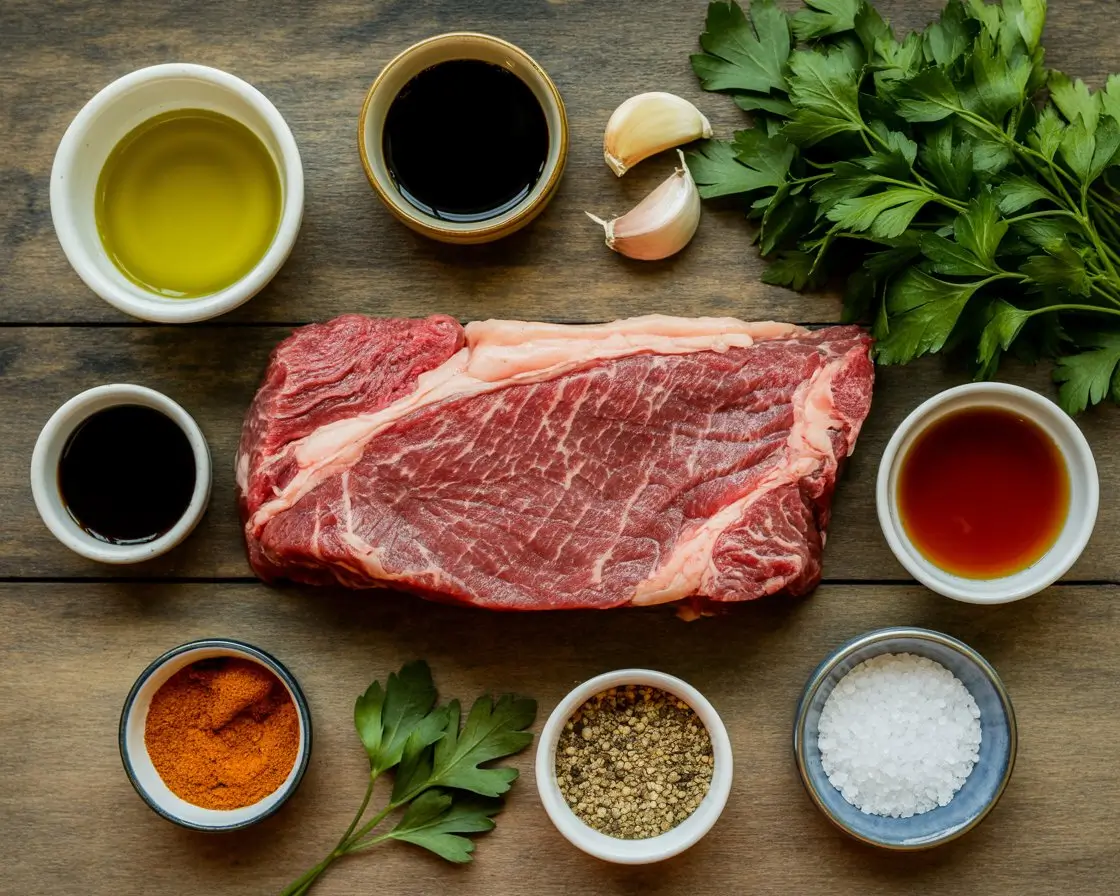
For the steak and marinade:
- 1.5 to 2 pounds of flank steak (look for even thickness for consistent cooking)
- 3 tablespoons of olive oil (or avocado oil as a higher smoke-point alternative)
- 3 cloves of garlic, minced
- 2 tablespoons of soy sauce (or coconut aminos for a lower-sodium option)
- 1 tablespoon of Worcestershire sauce
- 1 tablespoon of red wine vinegar (or apple cider vinegar)
- 1 teaspoon of smoked paprika
- 1 teaspoon of dried oregano
- Half a teaspoon of black pepper
- Half a teaspoon of kosher salt
- Optional: a pinch of red pepper flakes for heat
For finishing:
- 1 tablespoon of unsalted butter (or ghee)
- Fresh parsley, roughly chopped
- Flaky sea salt for serving
The marinade is the backbone of this recipe. The acid from the vinegar and soy sauce breaks down muscle fibers gently, while the oil carries fat-soluble flavors deep into the meat. Do not skip this step.
Timing
One of the great advantages of flank steak is how time-efficient it is compared to other beef preparations.
| Step | Time |
|---|---|
| Marinating time | 2 to 4 hours minimum (overnight for best results, up to 24 hours) |
| Preparation time | 10 minutes |
| Resting time before cooking | 30 minutes (to bring steak to room temperature) |
| Active cooking time | 8 to 12 minutes |
| Resting time after cooking | 10 minutes |
| Total time (excluding overnight marinade) | Approximately 60 minutes |
This is roughly 30% less active cooking time than comparable beef preparations like braised short ribs or a slow-roasted chuck. For a weeknight dinner, the hands-on effort is minimal.
Step-by-Step Instructions
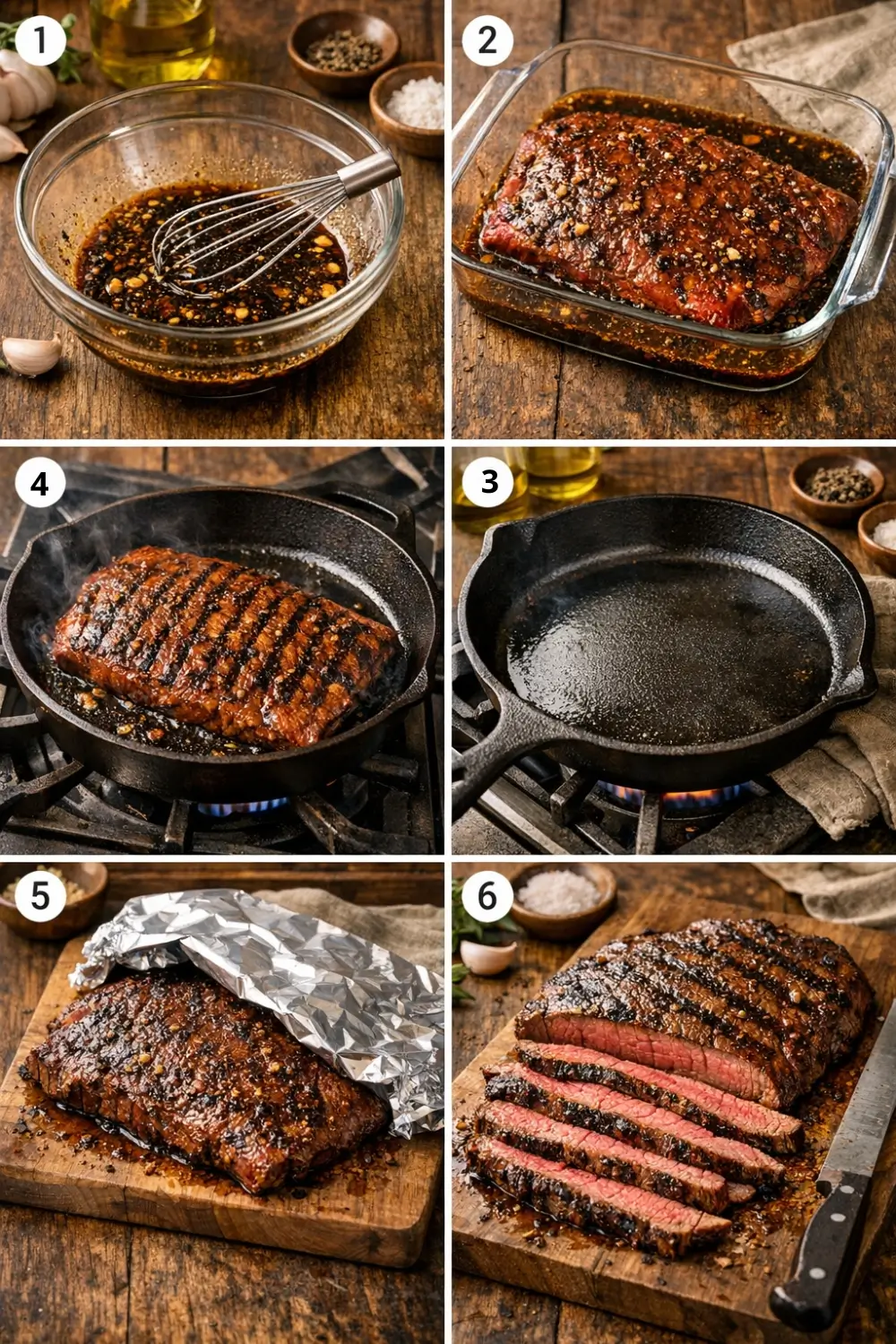
Step 1: Prepare the Marinade
Combine olive oil, minced garlic, soy sauce, Worcestershire sauce, red wine vinegar, smoked paprika, oregano, black pepper, and salt in a bowl. Whisk until fully emulsified. The goal is a cohesive liquid that will coat every surface of the steak evenly.
Step 2: Score and Marinate the Flank Steak
Using a sharp knife, lightly score the surface of the flank steak in a crosshatch pattern, cutting no deeper than a quarter inch. This is not just cosmetic — scoring increases the surface area that the marinade can penetrate, and it helps the steak cook more evenly.
Place the steak in a zip-lock bag or a shallow glass dish. Pour the marinade over it, turning to coat both sides thoroughly. Seal and refrigerate for a minimum of 2 hours. Overnight marinating produces noticeably more tender and flavorful results.
Step 3: Bring the Steak to Room Temperature
Remove the steak from the refrigerator 30 minutes before cooking. Cooking a cold steak straight from the fridge leads to uneven cooking — the exterior overcooks while the interior stays underdone. Allowing it to rest at room temperature ensures a more consistent cook from edge to center.
Step 4: Preheat Your Cooking Surface
If you are grilling, preheat to high heat — around 450 to 500 degrees Fahrenheit. If you are using a cast iron skillet, heat it over high heat until it just begins to smoke lightly. A very hot surface is non-negotiable for flank steak. It creates the Maillard reaction, the chemical process responsible for that deeply browned, savory crust that makes beef so satisfying.
Step 5: Pat the Steak Dry
Before cooking, remove the steak from the marinade and pat it completely dry with paper towels. This is a step many home cooks skip, but it is critical. Excess moisture on the surface of the meat will steam rather than sear, preventing the crust from forming properly.
Step 6: Cook the Steak
Place the steak on your preheated grill or skillet. Cook for 4 to 5 minutes per side for medium-rare, which is the ideal doneness for flank steak. Use a meat thermometer and pull the steak when the internal temperature reaches 130 to 135 degrees Fahrenheit. The temperature will rise a few more degrees during resting.
Resist the urge to move or press the steak while it cooks. Leave it alone and let the heat do the work.
Step 7: Add Butter and Rest the Steak
If using a skillet, add a tablespoon of butter in the final 60 seconds and tilt the pan slightly, basting the steak with the melted butter using a spoon. This adds richness and depth to the crust.
Transfer the steak to a cutting board and let it rest, loosely tented with foil, for at least 10 minutes. Resting allows the muscle fibers to reabsorb the juices that were pushed toward the center during cooking. Cutting too early means those juices end up on your cutting board, not in your steak.
Step 8: Slice Against the Grain
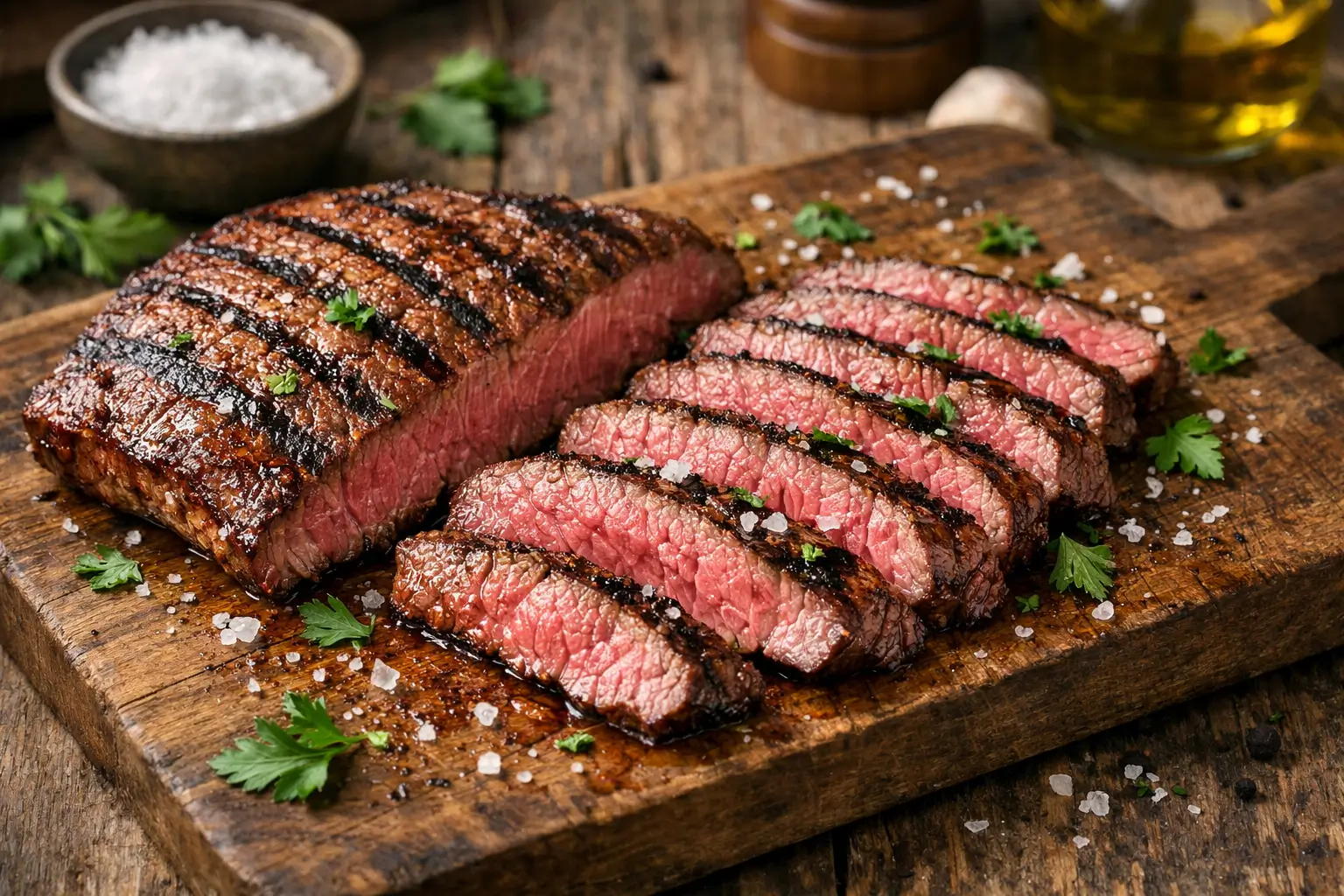
This is the single most important technique when serving flank steak. Look at the steak and identify the direction the muscle fibers run. Slice perpendicular to those fibers, not parallel. Cutting against the grain shortens the muscle fibers in each bite, making the steak dramatically more tender. Aim for thin slices, no more than a quarter inch thick, held at a slight diagonal.
Finish with a sprinkle of flaky sea salt and fresh parsley.
Nutritional Information
The following values are approximate, based on a 6-ounce serving of cooked flank steak with marinade, without additional sides.
| Nutrient | Amount per Serving |
|---|---|
| Calories | 280 – 310 kcal |
| Protein | 38 – 42 g |
| Total Fat | 12 – 14 g |
| Saturated Fat | 4 – 5 g |
| Carbohydrates | 2 – 4 g |
| Sodium | 480 – 550 mg |
| Iron | ~15% Daily Value |
| Zinc | ~30% Daily Value |
Flank steak is one of the leaner cuts of beef, with significantly less marbling than ribeye or strip steak. It is a strong source of complete protein and provides meaningful amounts of B vitamins, particularly B12, which supports neurological function.
Healthier Alternatives for the Recipe
Flank steak is already a relatively lean cut, but there are several adjustments worth considering depending on your dietary goals.
Reduce sodium by swapping soy sauce for coconut aminos, which contains roughly 65% less sodium and adds a slightly sweeter, milder flavor. For a dairy-free finish, replace the butter with a drizzle of good olive oil or skip it entirely.
If you are following a lower-fat approach, reduce the olive oil in the marinade to one tablespoon and use a non-stick spray on the cooking surface. The flavor impact is minimal when the marinade is well-seasoned.
For those managing blood sugar, the carbohydrate content is already very low. You can eliminate Worcestershire sauce (which contains a small amount of sugar) and replace it with a splash of beef broth and a few drops of balsamic vinegar.
If red meat is a concern but you love this preparation, this marinade works equally well with skinless chicken thighs or portobello mushroom steaks for a plant-based version.
Serving Suggestions
Flank steak is one of the most versatile proteins you can have in your cooking repertoire. Here are several directions you can take it.
- Serve it sliced thin over a bed of chimichurri and roasted vegetables for a vibrant, herbaceous plate.
- Layer it into warm flour tortillas with pickled onions, avocado, and salsa for outstanding steak tacos.
- Add it to a grain bowl with farro, arugula, roasted cherry tomatoes, and a lemon-tahini dressing for a satisfying lunch.
- Keep it simple alongside garlic mashed potatoes and steamed green beans for a classic weeknight dinner.
Cold leftover flank steak sliced thin also makes an excellent addition to salads, sandwiches, and rice dishes the next day.
Common Mistakes to Avoid
- Skipping the marinade. Flank steak has no intramuscular fat to keep it moist during cooking. The marinade provides flavor and some protection against drying out. Even a 30-minute marinade is better than none.
- Cooking it past medium. Flank steak becomes progressively tougher as it moves beyond medium doneness (145 degrees Fahrenheit). Aim for medium-rare to medium and use a thermometer rather than guessing.
- Not letting the steak rest. A full 10-minute rest is not optional — it directly affects juiciness.
- Cutting with the grain. Many home cooks slice in the direction the steak is facing, which often means cutting with the grain. The result is chewy, stringy bites regardless of how well it was cooked. Always identify the grain before the first cut.
- Using too low a cooking temperature. Flank steak needs high, direct heat. Cooking it on a medium flame produces a gray, steamed exterior rather than a proper sear.
Storing Tips for the Recipe
Leftover cooked flank steak stores well when handled properly. Allow the steak to cool to room temperature before refrigerating. Place it in an airtight container or wrap it tightly in plastic wrap, then foil. Stored this way, it will keep in the refrigerator for up to 4 days.
For longer storage, freeze the cooked steak in a single layer on a sheet pan until solid, then transfer to a freezer bag. It will keep for up to 3 months. Thaw overnight in the refrigerator before using.
When reheating, avoid the microwave if possible — it tends to toughen the meat. Instead, warm slices gently in a covered skillet with a splash of beef broth over low heat for 2 to 3 minutes. This preserves moisture and texture significantly better.
If you are meal prepping, the raw steak can be placed in the marinade and frozen immediately. Thaw it in the refrigerator, and by the time it is fully defrosted, it will have absorbed the marinade perfectly — an efficient approach with no extra effort.
Conclusion
Cooking flank steak perfectly comes down to a well-built marinade, high heat, a reliable thermometer, adequate resting time, and slicing against the grain. These five principles, applied consistently, will produce a tender, flavorful result every time. Flank steak is affordable, quick, and endlessly adaptable.
Try this recipe this week and share how it went in the comments below. We would love to hear your results, variations, or questions. If you found this guide useful, subscribe for more recipes, techniques, and kitchen strategies delivered regularly.
Frequently Asked Questions
Can I cook flank steak without marinating it?
You can, but the results will be noticeably less flavorful and potentially tougher. If you are short on time, even a 20 to 30 minute marinade at room temperature makes a meaningful difference. A dry rub with salt, pepper, garlic powder, and smoked paprika is a reasonable alternative in a pinch.
What is the best cooking method for flank steak?
High-heat grilling and cast iron skillet cooking both produce excellent results. The key variable is temperature, not the specific method. You want direct, intense heat to develop a seared crust quickly without cooking the interior past medium.
How do I know when flank steak is done without a thermometer?
The finger test is a common reference: press the center of the steak lightly. Medium-rare feels similar to pressing the fleshy area at the base of your thumb with your hand relaxed. That said, a meat thermometer is inexpensive and removes all guesswork. It is worth the investment.
Why is my flank steak always chewy?
The two most common causes are overcooking and slicing with the grain. Address both, and you will see an immediate improvement. Marinating adequately and resting the steak also contribute significantly to tenderness.
Can flank steak be cooked in the oven?
Yes. Broiling is the oven method that most closely replicates grilling. Position the steak 3 to 4 inches from the broiler element and cook for 4 to 5 minutes per side, monitoring closely. You can also sear it in a cast iron skillet and finish it in a 400-degree oven for a couple of minutes if needed, though flank steak rarely requires it given its thin profile.
How thin should I slice flank steak?
Aim for slices no thicker than a quarter inch, cut at a slight angle across the grain. Thinner slices are generally more tender and easier to eat, especially if the steak has been cooked to medium rather than medium-rare.